Published on: October 15, 2023
The Timeless Magic of Reading Aloud
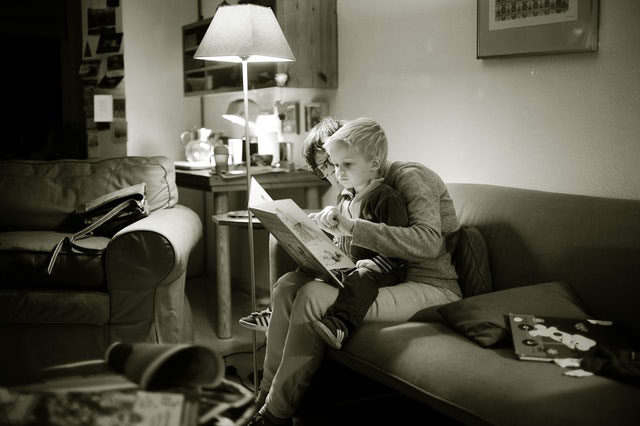
Meghan Cox Gurdon, in her Wall Street Journal article “The Great Gift of Reading Aloud,” says that in the not so distant past, reading aloud was the way children fell in love with stories. This is something I truly believe in as a Teacher and a Parent of an 8 year old.When we indulge in reading a story for our loved ones, we tend to encompass ourselves in the time and space of the book and begin to exist together in the warmth and the comfort of the words. This not only builds a sense of security but also leaves our child to believe in the endless possibilities of creative imaginations. Importance of reading can't be stressed upon enough. When you read “Goodnight Moon” or “Guess, How Much I love you” (my favorite bedtime stories) with your child, it is not just reading but the bond that you develop that is important. The Early Childhood Longitudinal Study found that beginning kindergarteners who had been read to at least three times a week had a greater ability to decode words compared to children who were read to less often.
Why Is Reading Important?
Books provide kids with literary opportunities to travel outside their small worlds to become aware of how others live. By reading books, children learn about values and morals in a way that is fun and age appropriate. “Slow and steady wins the race, Sharing is Caring, Friend in need is a friend indeed, Treat others how you want others to treat you” -sounds familiar isn’t it?We use these true to life quotes often without realizing how they have been imbibed into us in childhood through simply moral stories. Books offer a wider worldview than most of us can ever hope to achieve in our daily lives. The ETL learning Publishers has an excellent set of Children Values books that help to strengthen the concept of empathy in children. Seven Habits of a Happy Kid- by Sean Covey is a wonderfully illustrated book that connects well with children of all ages. Importance of reading can't be stressed upon enough.
Stages Of Reading

From kindergarten through third grade, when kids are just starting to read, the focus in all subjects is typically on the teacher talking to the kids. At this stage, teaching is oral and the kids with the largest vocabularies have an advantage because they understand most of what the teacher is saying. Books, like magazines and newspapers, contain sophisticated and complex language that uses complete sentences. So it makes sense that a child who hears more sophisticated words has a giant advantage over a child who hasn’t heard those words.
Exploring the World of Authors
Introducing our children to various authors and their style of writing exposes them to different worlds of rhymes, imagination, songs and so on. I absolutely love Ms Julia Donaldson’s work, be it The Smartest Giant in Town, Night Monkey- Day Monkey, A Squash and a Squeeze, Zog, or The Troll. Each story brings out the fantasy and captures the imagination, creating a sense of anticipation in each of the learners.Books like Dr Seuss give an entire new meaning to rhyme and changes the way children can learn. Educative yet funny, his books encourage the children to imagine beyond the ordinary, The Cat in the hat, Put me in the Zoo, Oh! The Thinks that you can Think, Is a Camel a Mammal and many more never fail to enthrall the children. Importance of reading can't be stressed upon enough.
Long Term Benefits of Reading
Books enable parents and teachers to give our children the irreplaceable gift of storytelling; a gift that begets life, love, culture, fantasy, adventure and mystery. It takes us into a world where our imagination knows no limits and the impossible is real. But no matter what or how many books I recommend, in the end what matters is- the time that you read to your child. It is this time that the children will cherish forever.Author: Mahera Sham, Pre-primary Teacher Librarian
JBCN International School Parel
FAQs
-
Why is reading crucial in early childhood?
Reading in early childhood is crucial for several reasons. It lays the foundation for literacy development, including vocabulary acquisition, phonological awareness (understanding sounds in words), and print awareness (understanding how print works). It also fosters cognitive development, enhancing memory, concentration, and critical thinking skills. Reading aloud exposes children to rich language and complex sentence structures, which improves their own language skills. Additionally, it nurtures a love of learning and books, setting them up for future academic success.
-
How does reading support language development?
Reading supports language development in multiple ways. It expands vocabulary by introducing new words and concepts in context. It improves grammar and syntax by exposing children to correct sentence structures. It enhances comprehension skills by encouraging children to follow narratives and understand complex ideas. It also develops oral language skills as children discuss stories and characters.
-
What benefits do children gain from early reading?
Children gain numerous benefits from early reading. They develop stronger literacy skills, which are essential for academic success. They improve their cognitive abilities, such as memory, attention, and critical thinking. They gain a broader understanding of the world through exposure to different cultures, perspectives, and ideas. Reading also fosters empathy and social-emotional development by allowing children to connect with characters and their experiences. Finally, it strengthens the parent-child bond through shared reading experiences.
-
How can parents encourage reading habits in children?
Parents can encourage reading by making it a regular part of their routine, such as reading aloud before bedtime. They can create a reading-rich environment by providing access to a variety of books, magazines, and other reading materials. They can visit the library regularly and let children choose books that interest them. Parents should also model good reading habits by reading themselves and discussing what they are reading with their children. Making reading a fun and enjoyable experience is key.
Share