
Published on: September 3, 2026
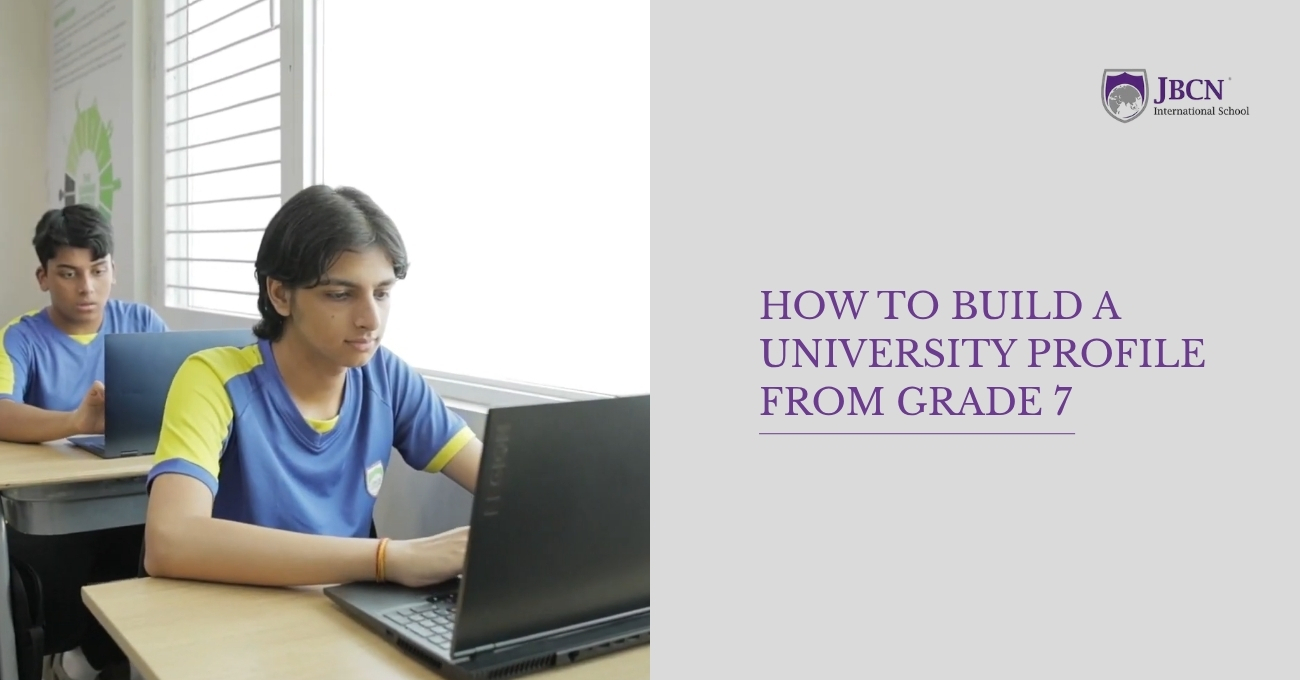
Most students start thinking about university in Grade 11. The students who get into the best ones started years before that.
This is not about putting pressure on a twelve-year-old. It is about understanding that the things universities care about most, genuine intellectual curiosity, sustained commitment, a clear sense of who you are, take years to develop. You cannot manufacture them in eighteen months.
What Universities Are Actually Looking For
Selective universities are not admitting transcripts. They are admitting people. When an admissions tutor reads an application, they are asking: who is this person, what do they genuinely care about, what have they done with their opportunities, and what will they contribute?
These questions can only be answered honestly by who you have become over the years leading up to your application. That process starts earlier than most families realise.
Grade 7: Wide Curiosity
Grade 7 is not the year to strategise. It is the year to be genuinely curious about the world, to try things, to read widely, and to start noticing what makes you tick.
- Try things you would not normally try. Be expansive. The focused version of you comes later.
- Start reading seriously and widely. Students who read consistently develop a quality of thinking that is extremely difficult to fake in a university application five years later.
- Notice what genuinely interests you. Which subjects make you look things up on your own? These early signals matter.
At JBCN School, Grade 7 students are supported through structured advisory sessions that begin building self-knowledge and exploring interests, not as university planning, but as the foundation that later planning builds on.
Grade 8: Curiosity Becomes Engagement
By Grade 8, the wide exploration of Grade 7 should begin to yield something more specific. Not a career plan, but a clearer sense of what genuinely pulls your attention.
- Go deeper in two or three things that interest you most.
- Take on a small responsibility. Leadership is a practice, not a title.
- Build a reading habit outside the syllabus. Students who arrive at IB with genuine intellectual interests produce the most convincing applications.
Grade 9: From Engagement to Genuine Interests
Grade 9 is when things start to feel more real. Subject choices, academic expectations, and the shape of the next several years are coming into focus.
- Choose Grade 9 and 10 subjects with some intention. At JBCN, these choices feed into IGCSE performance, which in turn shapes IB subject options.
- Identify two or three areas of genuine commitment and invest in them, not for the application, but because they are genuinely yours.
- Start developing a writing voice. The personal statement you will write in Grade 12 depends heavily on this.
Grade 10: Focus and Foundations
Grade 10 is one of the most important years in the trajectory. IGCSE examinations are a genuine milestone and IB subject selection is imminent.
- Perform seriously in IGCSE or equivalent examinations. These results form the baseline from which IB teachers will predict you in Grade
- Begin IB subject selection conversations with your counsellor. At JBCN, these begin formally in Term 2 of Grade 10 so every student arrives at registration with a clear, evidence-based rationale for each subject.
- Deepen extracurricular commitments deliberately. University applications reward depth over breadth.
Grade 11: Building in Earnest
The application is two years away and every decision matters.
- Take IB seriously from day one. Internal Assessments begin in Grade 11. Predicted grades are based substantially on Grade 11 performance.
- Choose your Extended Essay topic with genuine thought. A well-executed EE in your field of interest is a meaningful addition to your application and a genuine interview talking point.
- Begin serious university research. At JBCN, Grade 11 students build a researched university longlist through individual counselling sessions and access to data on where previous students have been placed.
Grade 12: Execution
By Grade 12, the profile is largely built. The job now is to articulate it clearly, perform under pressure, and manage deadlines without missing anything critical.
- Personal statement: The best ones are not constructed in September of Grade 12. They emerge from years of genuine experience and honest reflection. At JBCN, personal statement support is intensive and individual, drawing on the self-knowledge built since early secondary.
- Mock examinations determine predicted grades. Treat them as real examinations.
- Deadlines do not move. UCAS early deadlines for Oxford, Cambridge, and medicine are in October. US early decision rounds close in November. At JBCN, the counselling team maintains a personalised deadline calendar for every Grade 12 student.
The Bottom Line
The students who get into the universities they most want to attend are rarely the ones who suddenly worked very hard in Grade 12. They are the ones who spent several years becoming genuinely interesting people with real interests, real skills, and real things to say about themselves. At JBCN School, that process starts in Grade 7.
Want to understand how JBCN supports students from Grade 7 through to university placement? Speak to our admissions team or attend one of our open days.
Related Reading
- How University Counselling Works at International Schools in Mumbai
- CAS and Clubs: Real-World Leadership Building
- JBCN 2026 University Placements: 488 Offers and USD 6M in Scholarships
- 5 Tips to Get College Ready
Frequently Asked Questions
-
When should students start building a university profile?
Ideally from Grade 7 or 8. The qualities that selective universities value most, including genuine intellectual curiosity, sustained commitment, and a clear sense of identity, take years to develop and cannot be assembled in the months before application deadlines.
-
When does IB subject selection happen?
IB subject selection formally happens at the end of Grade 10 before Grade 11 begins. At JBCN School, counsellors begin these conversations with students and families in Term 2 of Grade 10.
-
How important are Grade 9 and 10 results for university applications?
Grade 9 and 10 results, including IGCSE results, form the academic baseline that IB teachers draw on when making predicted grade assessments. Strong performance in these years builds the evidence base for higher predictions.
-
What extracurricular activities help university applications?
Depth over breadth. Two or three genuine, sustained commitments where the student has shown initiative, leadership, or real impact are far more compelling than a long list of shallow club memberships.
Share