
Published on: August 31, 2026
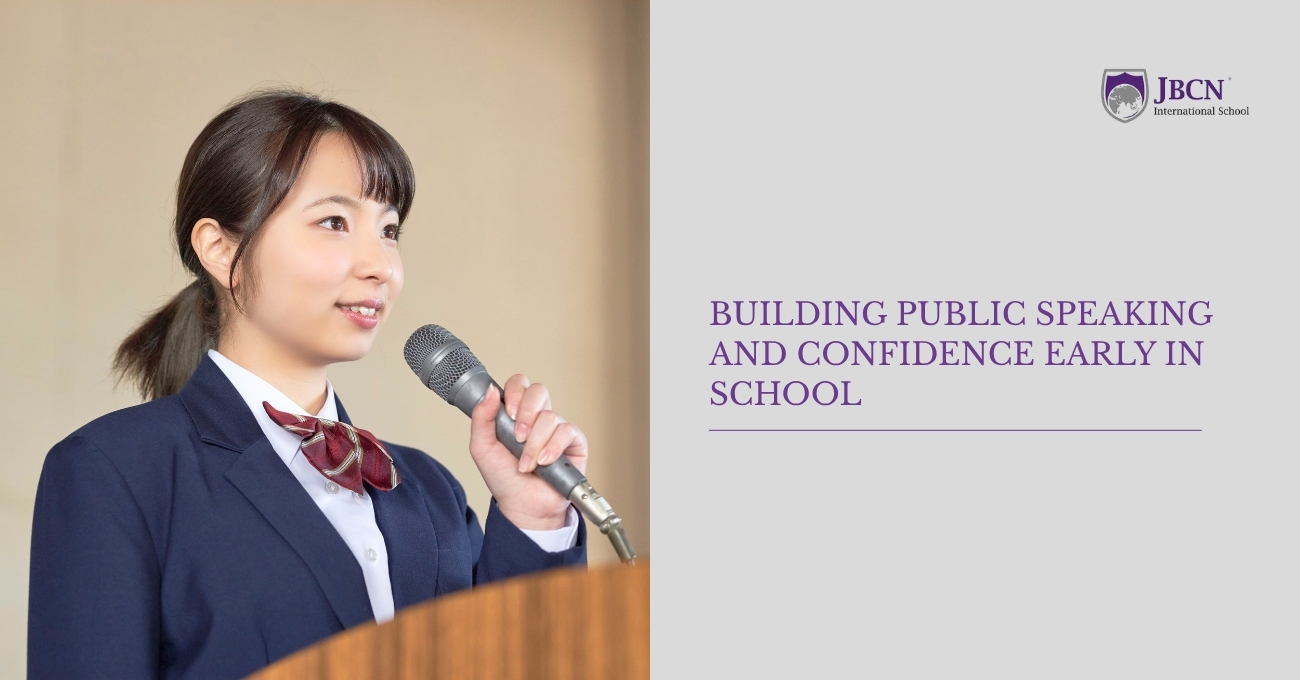
Almost every parent has watched it happen. A child who chatters happily at home goes quiet and shaky the moment they have to speak in front of the class. Public speaking makes many children nervous, but here is the reassuring part: it is a skill, not a personality trait, and skills are built with practice. Below is a practical, step-by-step way to build public speaking and confidence, starting small and growing from there.
Why Building The Skill Early Works
Confidence built young tends to stick, which is why early practice matters more than natural talent. The sooner a child gets comfortable being heard, the more it becomes second nature, and strong communication skills for children shape everything from class participation to future work.
- Confidence that carries into the classroom and beyond
- Clearer thinking, because a talk forces ideas into order
- The courage to lead, ask questions, and share opinions
How To Build Public Speaking Skills Step By Step
The trick is to build the skill in small stages rather than pushing a child onto a big stage and hoping. Work through these in order, and let each settle before the next.
Start With A Tiny Audience
The fastest way to build confidence is to shrink the audience. Have your child present to one parent, a sibling, or even a pet before they ever face a class. Small, friendly listeners take the fear out and make speaking feel ordinary.
Give Every Talk A Clear Beginning, Middle, And End
A simple structure makes speaking far less scary, because a child always knows what comes next. Teach a three-part shape: say what the talk is about, share two or three points, then finish with a line that wraps it up. Structure quietly carries a nervous speaker through.
Practise A Few Simple Techniques
A handful of small habits do most of the work. Slow down, look up at the audience, pause to breathe, and speak a little louder than feels natural. Working on one habit at a time is far easier than trying to fix everything at once.
Speak Out Loud Every Day
Public speaking improves with repetition, just like any skill. Reading aloud, telling a story at dinner, or explaining a favourite game all count as real practice. A few minutes daily beats one big rehearsal a month.
Build Up To Bigger Audiences
Once one listener feels easy, add more, one step at a time. Move from a parent to the whole family, then a few friends, then a class or a club. Each rung of the ladder makes the next one feel manageable.
Everyday Ways To Practise At Home
Home is the safest stage a child will ever have, which makes it the perfect place to build the skill. A few gentle habits grow presentation skills without any pressure.
Turn Everyday Moments Into Practice
Ordinary moments make the best rehearsal space. Ask your child to describe their day, retell a film, or teach you something they know, all of which build fluency without feeling like a lesson.
Record And Review Together
A phone camera is a surprisingly good coach. Record a short talk, watch it back together, and pick just one thing to improve next time, whether that is slowing down or making eye contact.
Keep It Fun And Low-Pressure
Games beat drills every time. Storytelling, charades, and show-and-tell grow presentation skills while a child is simply having fun, and many after-school activities do the same. Enjoyment is what keeps them coming back to practise.
How To Help A Nervous Or Shy Child
Some children need a gentler on-ramp, which is completely normal. Patience and small wins build confidence far better than pressure.
- Go slowly, and never force a reluctant child to perform on the spot
- Start with tiny audiences and familiar, comfortable topics
- Let them rehearse as much as they want before the real thing
- Celebrate the courage it took, not only how it sounded
- Share your own nerves, so they know that everyone feels them
What To Build At Each Age
The skill looks different at each stage, so match the practice to your child's age. Aim for steady, age-appropriate exposure rather than one leap.
- Early years: show-and-tell, singing, and speaking in small groups
- Primary years: short presentations, reading aloud, and class discussions
- Middle and senior years: debate, formal presentations, and Model United Nations, often through clubs and service projects
How JBCN Builds Confident Speakers
At JBCN, speaking, presenting, and performing are woven into the everyday, not saved for a once-a-year event. As an international school in Mumbai, the aim is for every Learner to find their voice and use it with confidence. That work sits close to social and emotional learning.
- Experience-led learning through the EduCreative approach turns projects into regular presentations.
- Skill-based programmes such as iPROPEL give Learners a stage for drama, Model United Nations, and performance.
- The secondary programme builds discussion and formal speaking from the middle years
- Assemblies, house events, and clubs give children real audiences all year round
Take The Next Step
A confident speaker is built one small talk at a time, in a place that feels safe to try. Come and see how we help Learners find their voice, and ask what it would look like for your child.
Speak with our admissions team at the JBCN campus nearest you.
Frequently Asked Questions
-
How Do You Build Public Speaking Skills In A Child?
Build the skill in small stages. Start with a tiny audience at home, give each talk a clear beginning, middle, and end, and practise a few habits like slowing down and looking up. Then build up to bigger audiences one step at a time.
-
At What Age Should Children Start Public Speaking?
Children can start as early as the pre-primary years through show-and-tell, singing, and speaking in small groups. Short presentations and reading aloud suit the primary years, with debate and formal speaking coming later. The earlier the gentle practice begins, the easier confidence grows.
-
How Can Parents Build A Child's Public Speaking Confidence?
Turn everyday moments into practice, rehearse short talks together, and record them to review. Focus on slowing down, looking up, and pausing to breathe. Praise the effort and courage, not just a polished delivery, so your child keeps trying.
-
What Are Good Public Speaking Activities For Children?
Show-and-tell, reading aloud, storytelling, debate, elocution, drama, and Model United Nations all work well. Each gives a child a real audience and a reason to speak. The best activity is the one your child enjoys enough to keep doing.
-
How Do You Help A Shy Child Speak In Public?
Go slowly, and never force it. Begin with tiny audiences and short, familiar topics, and celebrate every small step. A shy child usually gains confidence gradually, so patience matters far more than pushing.
-
How Long Does It Take To Build Public Speaking Confidence?
There is no fixed timeline, since it grows with practice rather than in one leap. Small, frequent efforts beat occasional big performances. Most children grow noticeably more comfortable within a few months of steady practice.
Share