
Published on: May 13, 2026
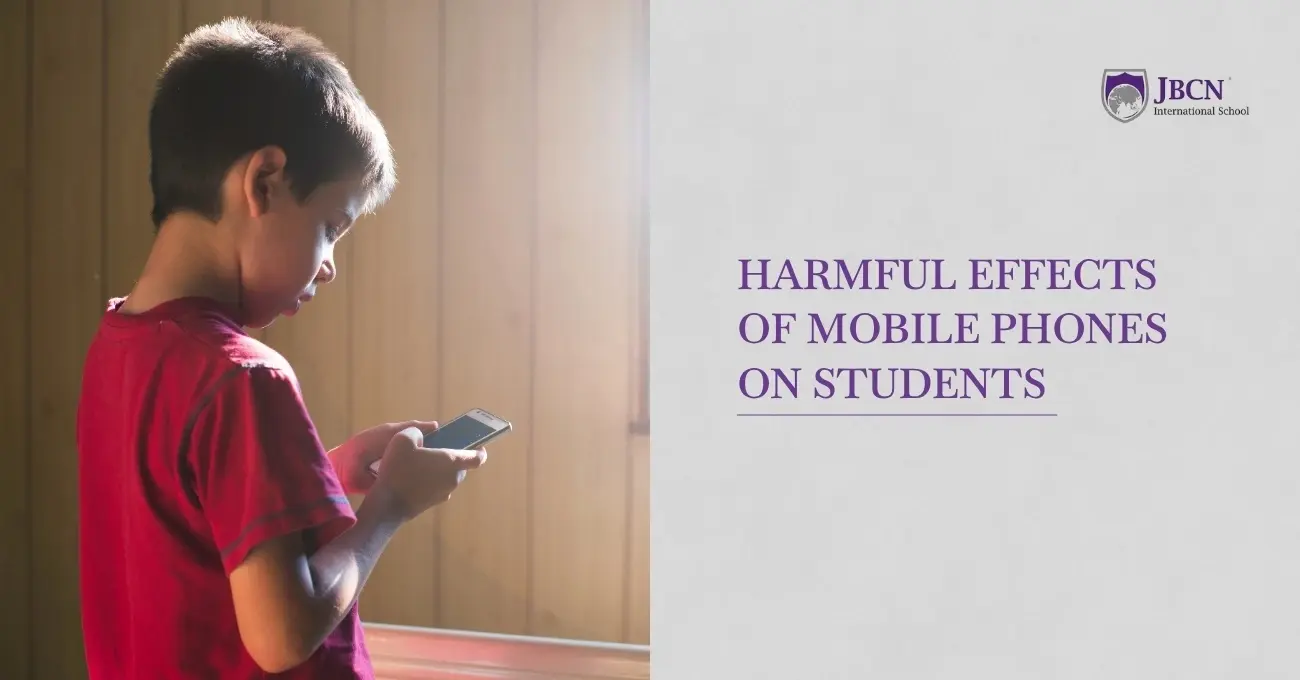
For many parents, the first phone in the house felt useful, a way to stay connected or keep children occupied during long drives. Over time, phones became constant companions, and most families now share the same concern: how much screen time is actually too much?
The reality is more balanced than extremes suggest. Mobile phones are not inherently harmful, but excessive and unmonitored use can affect sleep, concentration, emotional wellbeing, physical health, and academic performance, especially during school years when habits are still forming.
Six Common Harmful Effects of Mobile Phones on Students
The most widely observed effects of excessive mobile phone use among students include:
- Poor sleep quality
- Reduced concentration and academic focus
- Increased anxiety and stress
- Low mood and emotional withdrawal
- Self-esteem issues and cyberbullying
- Physical strain on the eyes and body
The impact usually depends on both screen time and the kind of content children consume daily.
Restless Sleep and Tired Mornings
Sleep is often the first thing affected by excessive phone use. Blue light from screens can interfere with melatonin production, the hormone responsible for regulating sleep cycles.
Late-night scrolling, gaming, messaging, and short-form videos also keep the brain mentally active long after children put their phones away.
Parents commonly notice:
- Delayed sleep schedules
- Difficulty waking up for school
- Morning fatigue
- Reduced attention during classes
- Irritability during the day
Over time, poor sleep can affect learning, emotional regulation, memory, and classroom participation.
Reduced Focus and Academic Performance
One of the biggest concerns around mobile phones is fragmented attention. Constant notifications and app switching make it harder for students to concentrate deeply for extended periods.
Even when a phone is kept face-down during study time, its presence alone can become distracting.
Some common academic effects include:
- Shorter attention spans
- Difficulty concentrating during homework
- Reduced reading comprehension
- Lower retention of information
- Weaker performance in subjects requiring deep focus and analytical thinking
This becomes particularly noticeable in academically rigorous programmes such as ICSE, Cambridge IGCSE, A Levels, and the IB Diploma Programme, where sustained concentration and independent work are essential.
Rising Anxiety and Stress
Heavy phone use, especially social media exposure, is increasingly linked to anxiety among teenagers.
Group chats, notifications, online comparisons, and the pressure to stay constantly available can create low-level stress throughout the day. Many students also struggle with the fear of missing out, commonly known as FOMO.
Over time, constant digital stimulation can make it harder for children to relax, focus quietly, or spend time away from screens comfortably.
Low Mood and Emotional Withdrawal
Excessive passive scrolling can also affect emotional wellbeing. Image-based platforms often encourage comparison, unrealistic expectations, and validation-seeking behaviour through likes, followers, and views.
Students who spend long hours online sometimes become:
- Less socially engaged offline
- More emotionally withdrawn
- Easily frustrated
- Less motivated academically
- More dependent on external validation
Poor sleep and reduced physical activity often intensify these emotional effects further.
Self-Esteem Issues and Cyberbullying
Unlike traditional school conflicts, online bullying can follow children home and remain accessible around the clock.
Negative comments, exclusion from group chats, online comparison, and public social interactions can significantly affect self-esteem during adolescence.
Because social media activity is highly visible and constantly accessible, emotional impact often becomes harder for students to escape or process privately.
Eye Strain, Poor Posture, and Reduced Physical Activity
The physical effects of prolonged mobile phone use are becoming increasingly common among students.
Excessive screen time can contribute to:
- Digital eye strain and headaches
- Dry eyes and blurred vision
- Neck and shoulder pain
- Poor posture
- Reduced physical movement and outdoor activity
- Increased fatigue and low energy levels
While each issue may appear small individually, the long-term impact of poor digital habits can gradually build over time.
How Much Phone Use Is Too Much?
The same device can be useful or harmful depending on how it is used. Educational use and recreational scrolling create very different outcomes.
| Use Pattern | Daily Screen Time | Likely Impact |
|---|---|---|
| Light and intentional | Under 1 hour | Minimal negative impact |
| Moderate and structured | 1–3 hours | Mild impact on focus and sleep |
| Heavy and unstructured | 3+ hours | Higher risk of sleep, focus, and mental health issues |
These ranges are broad guidelines rather than strict rules. The quality of content, supervision, and overall routine matter just as much as screen time itself.
Practical Ways Parents Can Create Healthier Phone Habits
Most families do not need to completely remove mobile phones. What helps more is creating healthy routines and boundaries around usage.
A few practical steps include:
- Keeping phones outside bedrooms at night
- Creating phone-free meal and homework times
- Encouraging outdoor activities and hobbies
- Monitoring content, not just screen time
- Using parental controls where appropriate
- Modelling healthy phone habits as adults
Children usually respond better to clear, consistent routines than sudden restrictions.
How JBCN Encourages Healthy Digital Balance
At JBCN, digital wellbeing is approached through awareness, balance, and responsible use rather than fear-based restrictions.
Across campuses, learners are introduced to digital citizenship, online safety, responsible technology use, and healthy screen habits from an early age. Educators also encourage focused classroom engagement, discussion-based learning, collaboration, sports, performing arts, and co-curricular participation so that screens remain one part of a broader learning experience rather than the centre of it.
The EduCreative philosophy encourages learners to balance technology with creativity, physical activity, communication, and real-world experiences.
Explore Learning Beyond Screens at JBCN
Across Borivali, Parel, Oshiwara, Chembur, and Mulund, JBCN classrooms encourage balanced learning experiences that combine academics, collaboration, creativity, sports, and real-world engagement beyond screens.
FAQs
-
How many hours of mobile phone use is harmful for students?
Excessive recreational screen time beyond 3 hours daily is generally associated with higher risks related to sleep, focus, and emotional wellbeing.
-
Does mobile phone use affect academic performance?
Yes. Frequent distractions, multitasking, and reduced attention spans can affect concentration, comprehension, and overall academic performance.
-
How do mobile phones affect sleep in students?
Blue light exposure and late-night stimulation can delay sleep cycles, reduce sleep quality, and increase daytime fatigue.
-
Can mobile phones affect teenagers’ mental health?
Heavy and unstructured social media use has been linked to anxiety, stress, low mood, and self-esteem issues in adolescents.
-
Can mobile phones still be useful for students?
Yes. Educational apps, research tools, language-learning platforms, and structured digital resources can positively support learning when used responsibly.
-
How does JBCN manage phone use in school?
JBCN follows age-appropriate phone usage guidelines across campuses while integrating digital citizenship and responsible technology use into the learning environment.
Share