
Published on: September 22, 2026
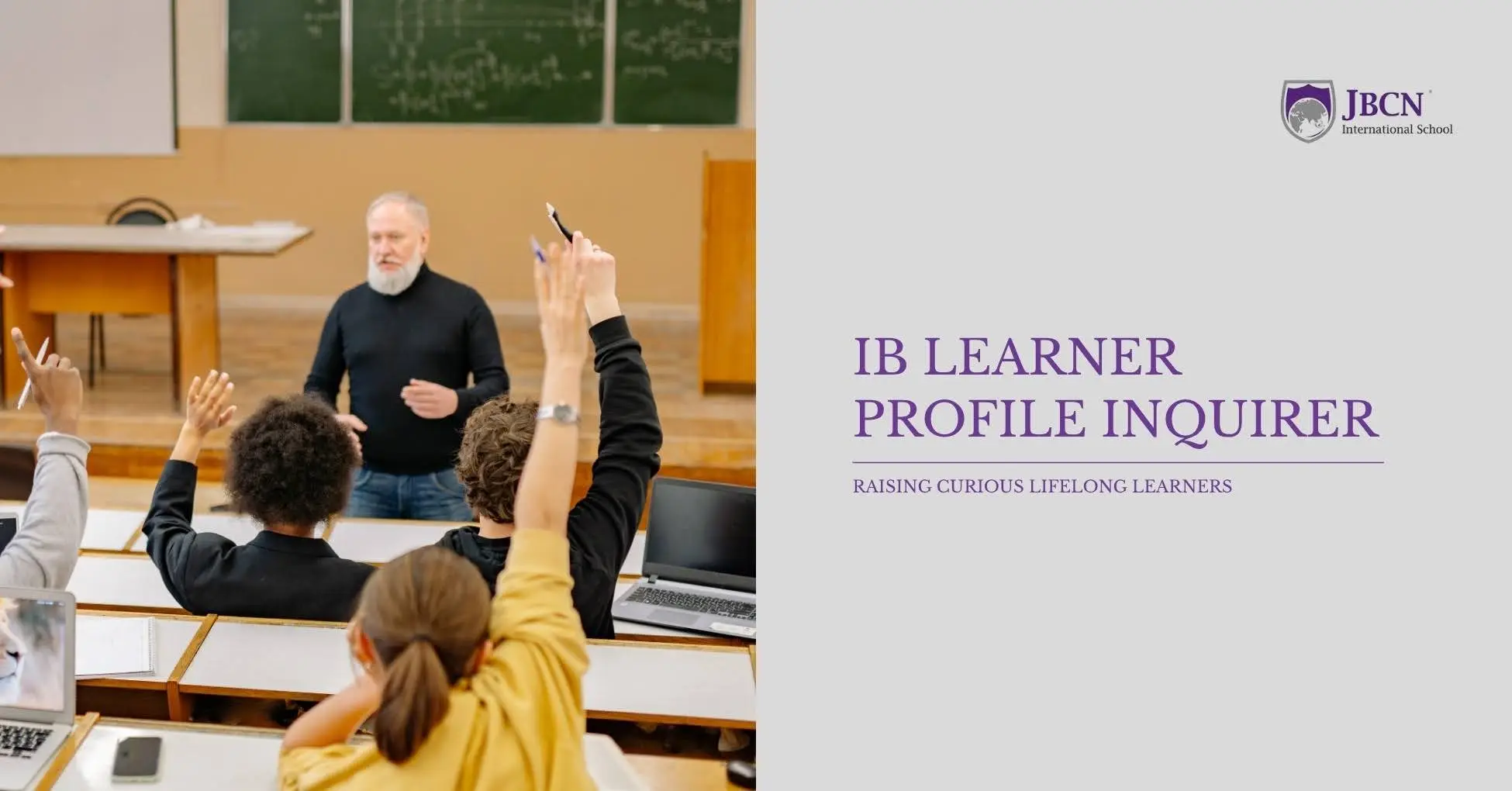
Every parent of a young child knows the endless stream of "why" questions, and the IB sees that instinct as something to protect, not outgrow. Curiosity is the engine of real learning, yet conventional schooling can quietly train it out of children. The inquirer attribute of the IB Learner Profile puts curiosity back at the centre. The sections below explain what an inquirer being means, what inquiry-based learning looks like day to day, and how parents can keep that curiosity alive at home.
What the IB Learner Profile Inquirer Attribute Means
An inquirer is naturally curious, develops the skills to research and investigate independently, and keeps a love of learning that lasts a lifetime. The attribute is less about knowing answers and more about knowing how to ask good questions and find out. Inquirer is one of the ten qualities in the IB Learner Profile.
- Genuine curiosity about the world and how it works.
- The skills to research, investigate, and find things out.
- A love of learning that continues well beyond school.
What an Inquirer Looks Like in the Classroom
Inquiry is not a special event; in a strong early-years classroom, it is the everyday way learning happens. Rather than being handed facts to memorise, children are guided to ask, explore, and build understanding for themselves. Three habits make the difference.
Asking Open-Ended Questions
An inquiry classroom prizes questions that have no single right answer, because they open thinking rather than close it. A child asked "what do you notice?" learns more than one told, " This is the answer." Teachers model curiosity by wondering aloud alongside learners.
Research as a Daily Habit
Investigation is woven into ordinary lessons, not saved for a once-a-term project. Children observe, gather information, and test ideas as a normal part of the day. That steady practice builds independence early.
How PYP Units of Inquiry Work
In the Primary Years Programme, learning is organised into units of inquiry built around real, open questions that cross subjects. A single unit might weave together science, language, and social understanding around one theme. Learners drive much of the exploration themselves, guided by the teacher.
How JBCN Builds the Inquirer Attribute
At JBCN, inquiry sits naturally within the EduCreative approach, which pairs academic depth with enriching, exploratory experiences. Learners are encouraged to question, investigate, and connect ideas rather than absorb them passively, right from the pre-primary years.
The Parel pre-primary programme runs the IB PYP from nursery, so inquiry begins as soon as a child starts school.
How Parents Can Nurture Inquiry at Home
Curiosity grows where questions are welcomed, so the home is where the inquirer attribute is often shaped most. Small shifts in how you respond to a child's wondering make a lasting difference. A few habits help.
- Answer a "why" with "what do you think?" to keep the thinking going.
- Let your child follow a question, even when it slows things down.
- Investigate together, from a kitchen experiment to a library visit, without rushing to the answer.
Enquire About IB PYP at JBCN
The clearest way to understand inquiry-based learning is to watch it in a classroom. A short conversation with the admissions team shows how the IB PYP nurtures curious, independent learners from the earliest years.
Frequently Asked Questions
-
What Age Does the Inquirer Attribute Start Developing?
Inquiry begins from the earliest years, and the IB Primary Years Programme nurtures it from nursery onwards. Young children are natural questioners, so the aim is to protect and channel that instinct. The foundation laid early shapes how a child learns for years.
-
Is Inquiry-Based Learning Only for IB PYP?
No. Inquiry runs through the whole IB continuum, from the Primary Years Programme to the Diploma, where independent research reaches its peak. PYP simply makes inquiry most visible in daily classroom life. The mindset carries all the way up.
-
How Is the Inquirer Different From the Thinker?
Inquirer is about curiosity and asking questions, while thinker is about analysing information and solving problems. The two are closely linked, since good questions lead to deeper thinking. More on the thinker attribute sits in this guide to raising critical thinkers.
-
What Does Inquiry-Based Learning Look Like Day to Day?
Children ask questions, investigate, and build understanding through units of inquiry, rather than memorising facts in isolation. A typical day involves exploring a real question across subjects. The teacher guides rather than simply delivers.
-
Does Inquiry-Based Learning Still Cover Reading and Maths?
Yes. Literacy and numeracy are taught within and alongside inquiry, not replaced by it. Children still build strong foundational skills, but in a context that shows why they matter. The basics and curiosity grow together.
-
How Can I Tell if My Child Is Developing as an Inquirer?
Look for a child who asks "why" and "how," pursues their own questions, and stays curious beyond what is required. Independent wondering and a willingness to investigate are good signs. Curiosity that continues at home is the clearest indicator.
Share