
Published on: September 22, 2026
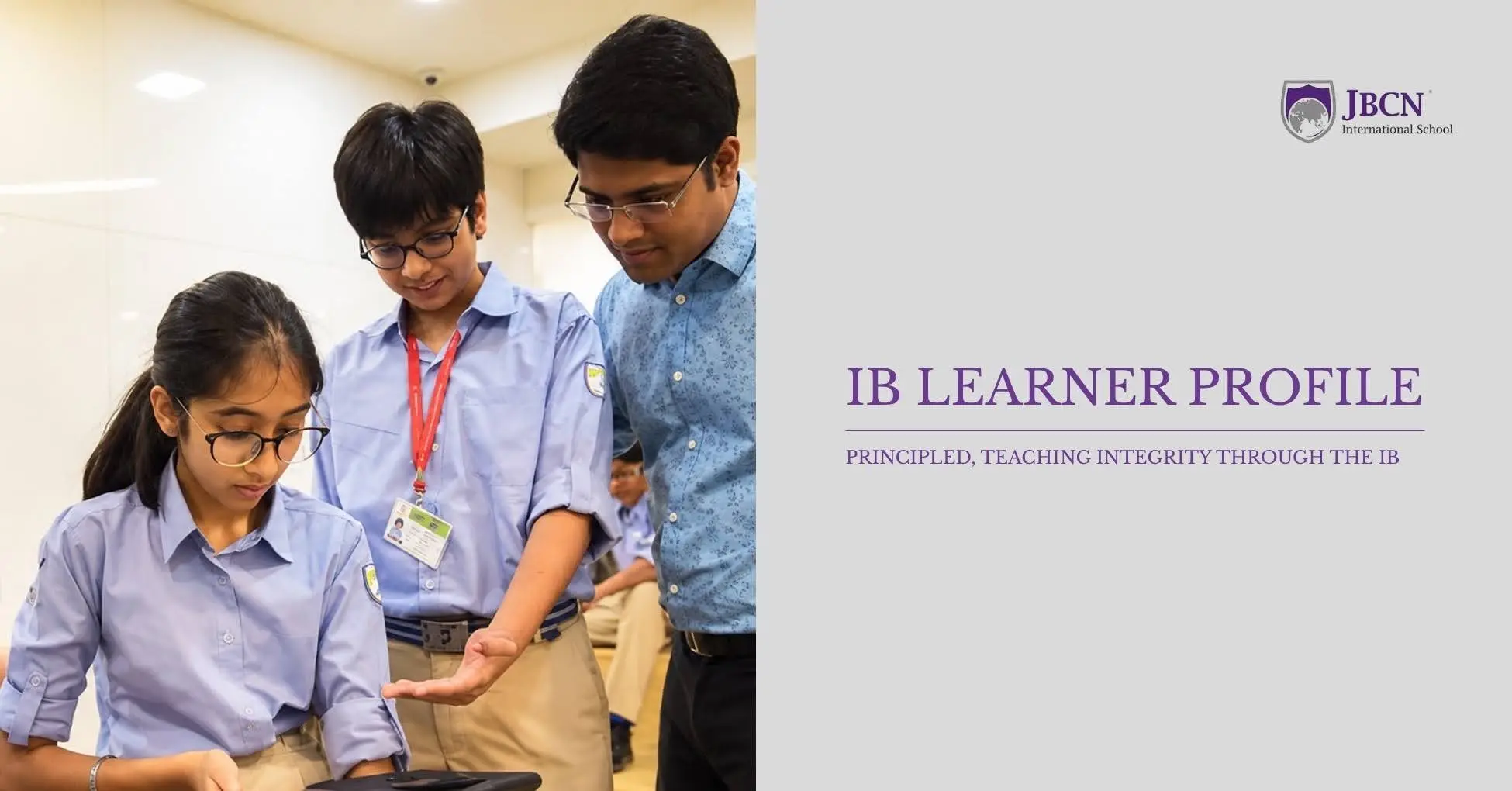
Integrity is easy to name and hard to teach, which is why parents often ask how a school actually builds it rather than just talking about it. In the IB, the principled attribute of the Learner Profile is not a slogan; it is woven into concrete mechanisms a parent can recognise. Academic honesty rules, the service ethic of CAS, and fairness in research all give the value something to stand on.
Here is what principled means in the IB, where it shows up in the Diploma, and how parents can recognise it.
What the IB Learner Profile Principled Attribute Means
A principled learner acts with integrity and honesty, holds a strong sense of fairness and justice, and takes responsibility for their own actions and their consequences. The attribute is one of ten in the IB Learner Profile, the set of qualities the IB aims to develop in every learner. The wider set is explained in this guide to the IB Learner Profile.
- Acting with honesty in schoolwork and beyond.
- Treating others with fairness and respect.
- Owning the outcomes of one's choices.
Where Principled Shows Up in the IB Diploma
The principled attribute is not taught in the abstract; it lives inside the Diploma's structure. Three parts of the programme make it concrete, from how work is submitted to how service is carried out. Each turns a value into a practice.
The IB's Academic Honesty Policy
Academic honesty sits at the heart of being principled. The IB expects original work, proper acknowledgement of sources, and integrity in every assessment, and schools teach this actively rather than only policing it. Learning to cite and credit honestly is a skill a learner carries into university.
CAS as Ethics in Action
Creativity, Activity, Service asks learners to engage genuinely with their community and reflect on what they did and why. Service done with real commitment, not for show, is integrity made visible. The reflection at the centre of CAS keeps the focus on honesty of intent.
Responsibility in Extended Essay Research
The Extended Essay is an independent research project, and it demands honest methods, fair use of sources, and accurate reporting of findings. How this is evaluated is set out in this guide to how IB Extended Essays are evaluated. Research integrity here is a rehearsal for academic life.
How JBCN Reinforces Principled Behaviour
At JBCN, being principled connects to the social responsibility that sits at the core of the EduCreative approach. Learners are encouraged to act with integrity and to contribute to a fairer, more responsible community, not only to score well. The IB Diploma Programme framework gives that value a clear structure through academic honesty and CAS.
How Parents Can Model This at Home
Integrity is learned as much at home as at school, and small, consistent examples matter more than lectures. A child who sees fairness and accountability modelled will absorb it. A few simple habits help.
- Talk through fair and unfair outcomes in everyday situations.
- Encourage owning up to mistakes without harsh punishment.
- Praise honest effort over the appearance of success.
Enquire About the IB at JBCN
The best way to see how character and academics grow together is to visit and ask. A short conversation with the admissions team shows how the IB Learner Profile shapes daily learning at JBCN's IB campuses.
Enquire about the IB Diploma at JBCN
Frequently Asked Questions
-
What Does Principled Mean in the IB Learner Profile?
Principled means acting with integrity and honesty, holding a strong sense of fairness, and taking responsibility for one's actions. Principled is one of the ten IB Learner Profile attributes. The IB develops it through both everyday expectations and formal policy.
-
How Does the IB Teach Academic Integrity?
The IB uses an academic honesty policy that sets clear expectations on original work and proper citation, reinforced across all coursework and assessment. Schools teach these habits actively, so learners understand why they matter. The aim is understanding, not just compliance.
-
What Happens if a Learner Breaches the IB's Academic Honesty Policy?
The IB treats academic misconduct seriously, and consequences can affect the assessment or the diploma outcome. Schools focus on preventing breaches through education and clear guidance. Confirm the specific policy details with the school.
-
How Does CAS Teach Ethics?
CAS, which stands for Creativity, Activity, Service, asks learners to engage genuinely with their community and reflect on their choices. That reflection turns values like fairness and responsibility into lived practice. Service done with real intent is the point, not the hours logged.
-
Is Principled Assessed Formally in the IB Diploma?
The Learner Profile attributes are developed and reflected on rather than scored as a subject. Integrity, though, underpins how all IB work is assessed, since academic honesty is a firm requirement. In that sense, being principled is fundamental, not optional.
-
Which JBCN Campuses Offer the IB Diploma?
JBCN offers the IB Diploma at Parel, Oshiwara, and Chembur. Each follows the same IB framework, including the Learner Profile and the academic honesty policy. Contact your chosen campus to learn more.
Share