
Published on: August 31, 2026
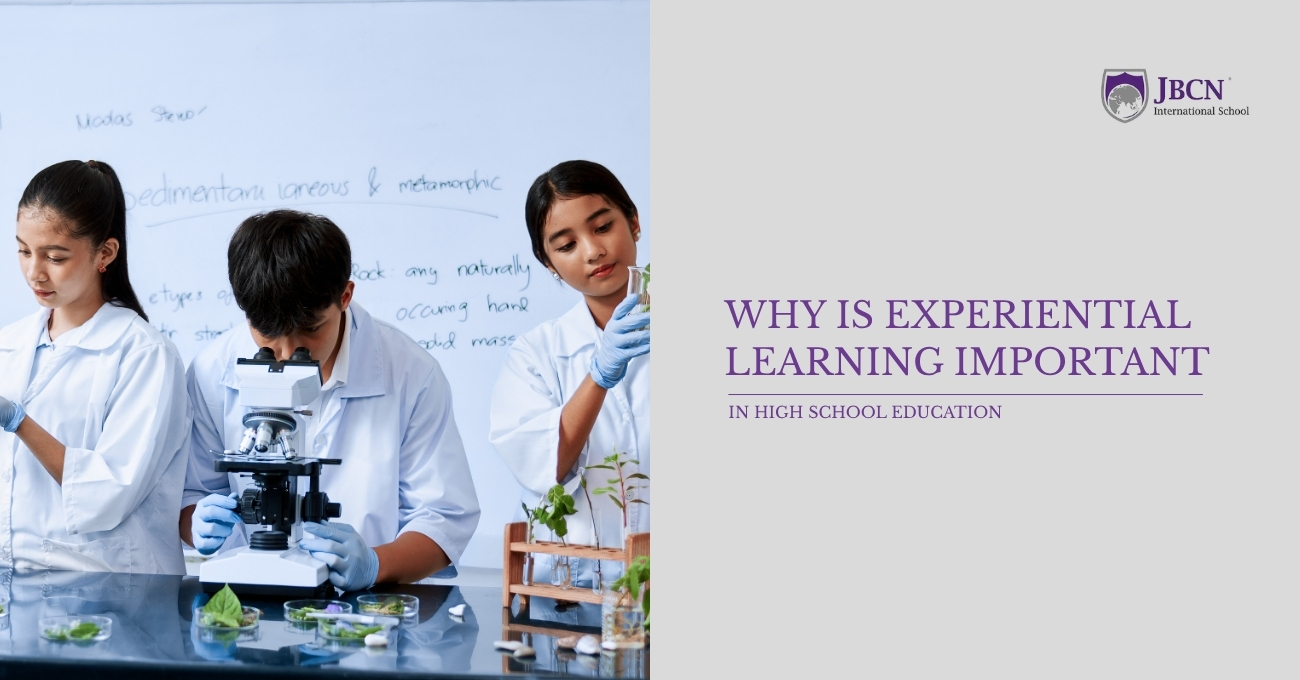
Ask most teenagers what they remember from school, and it is rarely the paragraph they memorised for a test. More often it is the science experiment that went wrong, the debate they nearly lost, the project they built with their own hands. That gap between what sticks and what fades is exactly why experiential learning matters so much in high school, the years when real skills and real confidence take shape.
What Is Experiential Learning
Experiential learning is learning by doing and then reflecting on it, rather than absorbing facts and repeating them back. A Learner tries something, sees what happens, thinks about why, and applies the lesson next time. The educationist David Kolb described this as a cycle of experience and reflection, and it is the opposite of passive, memorise-and-forget study.
Hands-on learning of this kind turns a Learner from a spectator into a participant. Understanding comes from wrestling with a real problem, not just reading about someone else's answer. The reflection step matters as much as the activity, because that is where the real lesson is drawn out and kept.
Why Experiential Learning Matters In High School
High school is where learning gets serious, with universities and careers on the horizon. Experiential learning suits these years because it builds the exact abilities that exams alone cannot measure, and a look at rote versus experiential learning shows the difference clearly.
Deeper Understanding That Sticks
Doing something creates memories that reading rarely can. When a Learner applies a concept to a real task, it moves from short-term recall into genuine understanding they can use later. Weeks after the lesson, the doing is what they still recall.
Real Skills For University And Work
Employers and universities look for problem-solving, teamwork, and communication far more than memorised content. Experiential learning builds these every day, through projects and challenges rather than lectures.
Stronger Engagement And Motivation
A Learner who is actively involved is far harder to bore. Hands-on tasks give a reason to care, which lifts effort and attendance in a way that passive lessons struggle to match.
Confidence Through Doing
Every problem solved and every project finished tells a Learner they are capable. That earned confidence carries into exams, interviews, and everything that follows.
Types Of Experiential Learning In Schools
Experiential learning in schools comes in several familiar forms, and good high schools weave them through the timetable rather than saving them for the odd activity day.
Project-Based Learning
In project-based learning, Learners work over days or weeks on a real challenge with a real end product. Planning, researching, and building the project teaches content and skills at the same time.
Inquiry-Based Learning
Inquiry-based learning starts with a question rather than an answer. A Learner investigates, tests ideas, and reaches conclusions, which mirrors how scientists, historians, and researchers actually work.
Hands-On And Practical Learning
Labs, fieldwork, simulations, role play, and making things all fall here. A Learner learns through direct experience, which is why active learning strategies tend to outlast passive note-taking.
How Experiential Learning Prepares Learners For University
The jump from school to university trips up many capable Learners, and experiential learning smooths it. Learner-centred classrooms build the independence that higher education demands from day one.
- Independent research and the confidence to work without constant direction
- Critical thinking that questions sources rather than accepting them
- Time management across long projects with real deadlines
- Collaboration and communication built through group work
- A portfolio of real work, not just a transcript of grades
Because it puts the Learner at the centre, this approach also allows for personalised learning that meets each child where they are.
How JBCN Brings Experiential Learning To Life
At JBCN, experiential learning is not an add-on; it is the everyday way lessons are taught. As an international school in Mumbai, the whole approach is built around doing, questioning, and reflecting rather than rote memorising.
- The EduCreative approach turns lessons into projects, experiments, and real-world challenges.
- The inquiry-led IB Diploma Programme asks Learners to research, question, and build independent work.
- The secondary programme carries hands-on, learner-centred teaching through the high school years.
- Skill-based activities give Learners real audiences, real teams, and real problems to solve
Take The Next Step
The best way to understand experiential learning is to watch it happen. Come and see a JBCN classroom in action, and ask how our approach would suit your child through the high school years.
Speak with our admissions team at the JBCN campus nearest you.
Frequently Asked Questions
-
What Is Experiential Learning In Simple Terms?
Experiential learning is learning by doing and then reflecting on the experience, rather than only memorising facts. A Learner tries something, sees the result, and applies the lesson next time. The approach turns a child from a passive listener into an active participant.
-
Why Is Experiential Learning Important In High School?
High school builds the skills that universities and careers demand, such as problem-solving, research, and teamwork. Experiential learning develops these through real projects and challenges rather than memorising. That understanding also goes deeper and lasts far longer than rote study.
-
What Is The Difference Between Experiential And Traditional Learning?
Traditional learning centres on the teacher delivering facts for a Learner to memorise and repeat. Experiential learning centres on the Learner doing, questioning, and reflecting. The first tests recall, while the second builds understanding and skills a Learner can actually use.
-
What Are Examples Of Experiential Learning?
Common examples include project-based learning, inquiry-based investigations, science labs, fieldwork, debates, simulations, role play, and building real products. Each puts a Learner in an active role. The best schools weave these through everyday lessons, not just special activity days.
-
Is Project-Based Learning The Same As Experiential Learning?
Project-based learning is one type of experiential learning, not the whole of it. Project work means tackling a real challenge over time to create an end product. Experiential learning also includes inquiry, hands-on practicals, and other forms of learning by doing.
Share