Published on: July 22, 2026
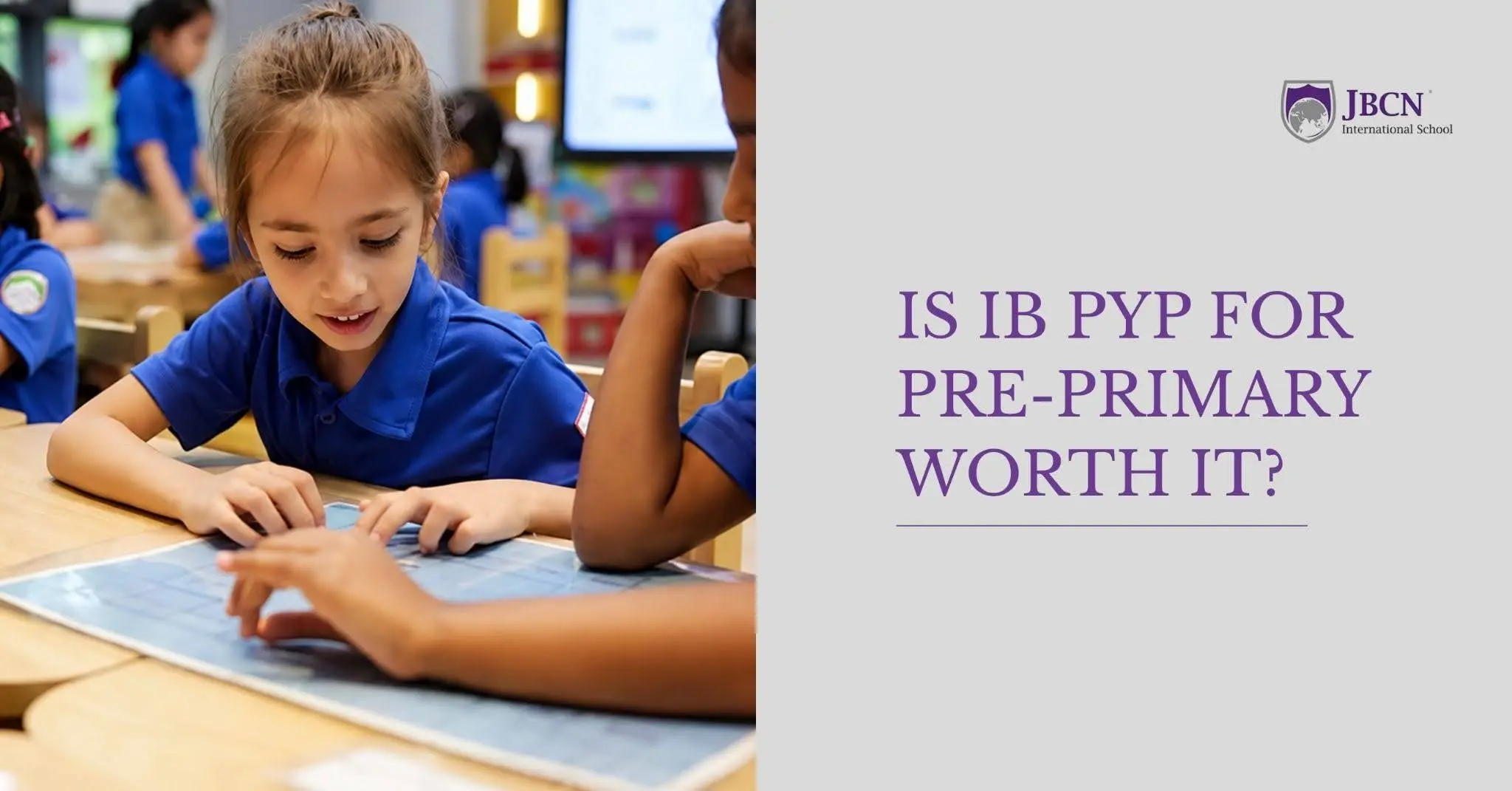
Every parent choosing a first school asks the same quiet question. Will an inquiry-led IB preschool really give my child more than a familiar, traditional one? The early years shape confidence and curiosity long before they shape marks, so the choice carries real weight. Here is an honest look at what the IB PYP offers young children, and when it is worth it.
What IB PYP for Pre-Primary Means
The IB Primary Years Programme (PYP) is an International Baccalaureate framework for children aged 3 to 12, which means the early years sit inside it by design. In a PYP setting, young children learn through questions, play, and hands-on exploration rather than worksheets and rote repetition.
For the pre-primary stage, the emphasis stays gentle and developmental. Children build language, early numeracy, and social skills through real experiences they can see and touch.
Where the Early Years Fit in the IB Pathway
The PYP is the first stage of a continuous IB journey that later leads to the IB Diploma Programme. Starting young means a child grows up inside one consistent way of learning, so each year builds naturally on the last.
Because the approach carries through, families avoid the disruption of switching systems every few years.
A wider view of how the IB stages connect from PYP to the Diploma shows exactly where the early years lead.
Is IB PYP for Pre-Primary Worth It?
For most families who value curiosity, communication, and a strong foundation, the answer is yes. The PYP approach in the early years is worth it when you want your child to enjoy learning, ask questions freely, and grow in confidence alongside literacy and numeracy.
Children in an inquiry-led setting develop:
- Curiosity that lasts, since they learn to ask and investigate rather than wait to be told.
- Early confidence, from expressing ideas and presenting to a small group.
- Social and emotional skills, built through collaboration and reflection.
- Foundations in reading, writing, and numbers, taught through real-world topics rather than drills.
Where Some Families Hesitate
Parents used to marks and tests sometimes worry that inquiry looks unstructured. In practice, literacy and numeracy stay central every day, and teachers track progress closely through observation rather than exams. For families who want their child to love school and think independently, that trade is usually worth making. The best way to settle the question is to visit a classroom and watch how children move, talk, and engage. What looks unstructured on paper tends to look purposeful in person.
What Skills Does IB PYP Develop in the Early Years?
The IB PYP builds far more than early academics. In the pre-primary years, it develops habits of mind and character that carry a child through school and beyond, growing alongside literacy and numeracy rather than competing with them.
Curiosity and Independent Thinking
Young children in a PYP setting learn to ask questions and investigate rather than wait to be told. That habit of inquiry grows into independent thinking, so a child meets a new problem with confidence rather than hesitation.
Communication and Confidence
Expressing ideas and presenting to a small group builds early confidence. Children practise listening, explaining their thinking, and speaking up, which strengthens communication long before formal presentations ever arrive.
Social and Emotional Skills
Collaboration and reflection sit at the heart of the PYP day. Working alongside others helps young learners share, take turns, and understand their own feelings, building the social and emotional skills that shape how well they learn.
IB PYP Early Years Compared With a Traditional Preschool
Both settings care for young children, yet they differ in how learning actually happens. The table below sets out the practical differences a parent tends to notice.
|
Factor |
IB PYP Early Years |
Traditional Preschool |
|
Learning approach |
Inquiry, play, and exploration |
Structured, teacher-led lessons |
|
Focus |
Curiosity, skills, and understanding |
Content and early academics |
|
Assessment |
Ongoing observation and portfolios |
Periodic tests and worksheets |
|
Role of the child |
Active participant in learning |
Mostly a listener |
|
What it builds |
Confidence, thinking, and love of learning |
Foundational knowledge |
In summary, an IB preschool suits families who want early academics and curiosity to grow together, within an international preschool curriculum that continues for years rather than ending at Grade 1.
What to Look For in an IB Preschool
Not every setting described as international delivers the PYP well, so a campus visit matters more than a brochure. A strong early-years programme shows a few clear signs.
Warm, Well-Planned Classrooms
The room itself tells you a great deal on a visit. Look for warm, well-planned classrooms where children explore and talk, taking an active part rather than sitting and copying from the board.
Facilitators Trained in Inquiry
How adults teach matters as much as the space. Facilitators trained in inquiry observe and guide young children toward their own discoveries, rather than lecturing to a quiet room.
A Clear Pathway Into the IB PYP
Ask where the preschool leads. A clear pathway into the IB PYP and the later years keeps learning consistent, so a child is not relearning how school works every couple of stages.
Open Communication With Parents
Good early-years settings keep parents close to the learning. Regular, open communication shows you how your child is learning and growing, not only what topics were covered that week.
Continuity That Avoids Disruption
Continuity is the thread that ties the other signs together. A preschool that leads into a full IB pathway spares your child the disruption of changing systems midway, letting confidence and skills build without interruption.
The IB PYP Pathway at JBCN
At JBCN International School, the Pre-Primary years are inquiry-led and nurturing by design, preparing young learners for the IB PYP, which runs from Grade 1 at Parel, Oshiwara, and Chembur. Pre-Primary itself is offered across all five campuses within the EduCreative approach, which blends academic depth with creativity and learning beyond the classroom.
Choosing this start places a child on a continuous IB pathway that reaches the International Baccalaureate Diploma Programme (IBDP), where JBCN learners have maintained a 100% pass rate.
For a closer look at how the programme works day to day, a guide for early-years parents walks through the themes, subjects, and assessment.
Begin the Conversation
The clearest way to know whether the PYP fits your child is to watch a classroom for yourself. The questions young learners ask, and the quiet focus in the room, tell you more than any guide can.
Speak with our admissions team to visit a campus and see how young learners begin at JBCN.
Frequently Asked Questions
-
Is the IB PYP Suitable for Pre-Primary Children?
Yes. The IB PYP is designed for children aged 3 to 12, so the pre-primary years are part of the programme. Learning happens through play, questions, and exploration suited to how young children think.
-
Is IB PYP for Pre-Primary Worth the Investment?
For families who value curiosity, confidence, and a strong foundation, it is. The early years build habits of thinking and communication that support a child through school and well beyond it.
-
What Is the Difference Between an IB Preschool and a Regular Preschool?
An IB preschool teaches through inquiry and real-world topics, while a regular preschool often relies on structured, teacher-led lessons. Both build early skills, though the IB approach places curiosity and understanding alongside academics.
-
Does an Inquiry-Led Preschool Still Teach Reading and Maths?
Yes. Literacy and numeracy stay central every day. Children learn to read, write, and work with numbers through meaningful, hands-on contexts rather than rote worksheets.
-
Where Does JBCN Offer the IB PYP?
The IB PYP runs from Grade 1 at the Parel, Oshiwara, and Chembur campuses. Pre-Primary is offered across all five JBCN campuses and prepares young learners for the programme.
-
What Comes After the PYP at JBCN?
The PYP leads into the secondary years and on to the IB Diploma Programme at Parel, Oshiwara, and Chembur. JBCN learners in the IBDP have maintained a 100% pass rate.
Share