Published on: January 10, 2025
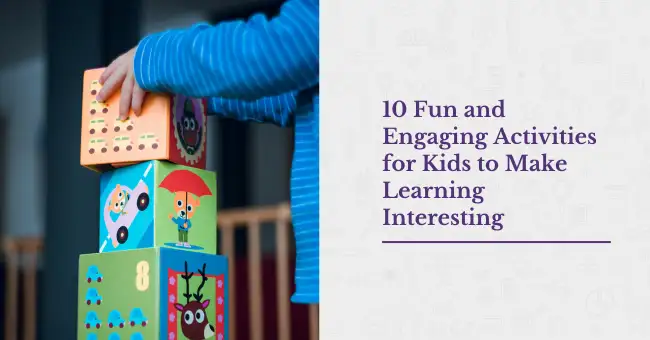
10 Fun and Engaging Activities for Kids to Make Learning Interesting
Keep your lil one's curiosity kicking and make learning more exciting. Try these fun activities for kids if you haven't already!
Scavenger Hunts
This easy-peasy way to add adventure into play is to set up a hunt around the house, at the building play area, or at a local park (if possible). Use old-school paper chits and challenge kids to find items based on clues about colours, shapes, or specific things like trees, shapes, or numbers. Set them out on a hunt and watch them turn into Sherlock Holmes!
Benefit: It helps them learn to follow instructions and enhances their observation skills, critical thinking, and ability to work in teams.
DIY Science Experiments
You can help them discover a whole new world of science by doing simple DIY experiments with everyday household items. Think of making a volcano erupt with baking soda and vinegar, creating slime with glue and borax, or sending them to experiment with magnets by asking them to bring back five iron, cobalt, or nickel items. Add dimensions to the experiment by asking them to take notes in their dedicated science lab notebook.
Benefit: It sparks curiosity and fosters problem-solving skills as kids observe and discuss the outcomes.
Arts and Crafts
This one is our favourite way to nurture creativity while subtly teaching about colours, shapes, textures, and even geometry. Have them create—anything from painting, drawing, or building models from clay to various craft activities—and reward them (something small or a badge, too) on completion. The internet is your best friend when getting started. We love projects that can be completed over a few days—like creating a family scrapbook, decorating picture frames, or designing their t-shirts.
Benefit: Through creation, kids learn to express themselves better, develop fine motor skills, and explore sensory experiences—all of which are essential for brain development.
Building Blocks and Puzzles
You can introduce critical thinking into play by building with blocks or solving puzzles. We like toys like LEGO sets, wooden blocks, or jigsaw puzzles, which keep them engaged for hours (a blessing to keep them screen-free). Watch as they construct towers, houses, or intricate patterns and learn about balance, symmetry, and engineering principles—click photos for memories.
Benefit: It helps develop spatial awareness and fine motor skills, enhances cognitive skills, promotes creativity and critical thinking, and sets the foundation for future problem-solving success.
Reading and Storytelling
There isn't a better parenting blessing than knowing your kids love to read. Start young—make them read smaller or picture books to take them on an adventure through their imagination. Gradually introduce them to classics, or if you are good at it, create exciting new stories and encourage them to come up with their own. Reading needs patience—discuss the plot, characters, and favourite parts, and make it interactive by using props, acting out scenes, or illustrating the stories.
Benefit: It boosts their comprehension and communication skills.
Outdoor Exploration
Nature is the best teacher. Enrol for a nature walk, go birdwatching, or simply play in the garden—it opens doors to valuable learning opportunities. Observe plants, animals, and weather patterns to better understand the environment. Even better? Document it.
Benefit: It helps develop an appreciation for the world around them while staying active and healthy.
Cooking Together
Cooking is a great way to learn about measurements, fractions, time, and the importance of following instructions. You can make their favourite meal or bake brownies and cookies and help them understand the science behind how heat transforms ingredients. Make them in charge of creating a new family recipe book.
Benefit: Cooking teaches patience and attention to detail, making it both a fun and educational experience.
Music and Dance
Let's make learning fun through rhythm! Play instruments, sing along, or create dances together to help your kids develop rhythm, coordination, and an understanding of sounds and beats. You can even dance to their favourite songs, learn the lyrics, or get creative by making music videos—it's a great way to build their memory skills while sharing joyful moments.
Benefit: It's a great way to foster creativity, express emotions, and stay active.
Sports and Games
One of our favourite ways to get some sunshine is to indulge in physical activities like football and basketball or simple games like tag and hide-and-seek. They teach teamwork, strategy, fair play, and leadership while improving motor skills, hand-eye coordination, and resilience as children learn to cope with winning and losing.
Benefit: Competitive games can also introduce math concepts such as scoring and timing, adding an educational twist to the fun.
Nature Art and Photography
You can capture the world through your camera's lens or create art from natural materials like leaves, stones, or twigs. This is a great afternoon activity we love that helps children slow down, observe the world more carefully, and learn about different natural textures and colours. They can also practice photography skills, experiment with angles, and even learn about editing images. Print these; they make great holiday gifts for friends and families.
Benefit: It develops a keen eye for detail and an appreciation for the beauty of the world around them.
Written by:
JBCN International School, Oshiwara
FAQs
-
What defines the best learning activities for kids today?
The best learning activities for kids blend fun with skill-building—like puzzles, science kits, or storytelling. These best learning activities for kids encourage curiosity and independent thinking.
-
How do the best learning activities for kids change with age?
Age affects attention span and interests, so the best learning activities for kids evolve from sensory play to STEM-based tasks. Matching activities to developmental stages ensures they remain the best learning activities for kids.
-
What role do parents play in facilitating the best learning activities for kids?
Parents create a supportive space and offer materials that fuel the best learning activities for kids. Active participation elevates even simple tasks into the best learning activities for kids.
-
Can outdoor play count as one of the best learning activities for kids?
Absolutely. Nature-based games and team sports are often considered the best learning activities for kids. They promote physical health and social skills—core to the best learning activities for kids.
Share