
Published on: May 18, 2026
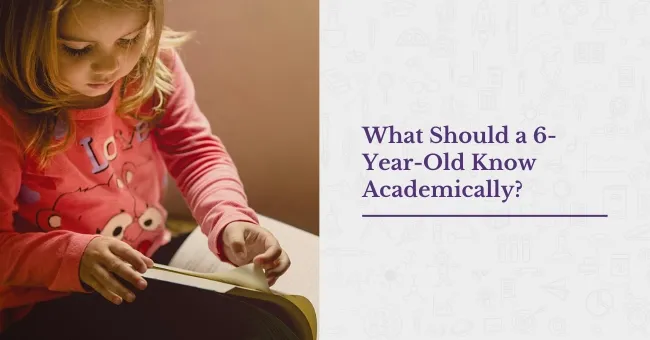
When children turn six, many parents begin to wonder whether their child is “on track.” Comparisons grow louder, expectations rise, and academic milestones start to feel urgent. At this age, however, learning is still about building strong foundations, not racing ahead.
At JBCN, early learning emphasises nurturing curiosity, confidence, and age-appropriate academic growth, recognising that each child develops at their own pace.
How Learning Looks at Age Six
Six-year-olds learn best through exploration, play, conversation, and hands-on experiences. Academic learning at this stage fosters thinking and expression rather than mere performance.
What matters most is not how much a child knows, but how they approach learning. A willingness to try, ask questions, and engage with ideas is a strong indicator of healthy development.
Reading and Language Development
By age six, many children start recognising familiar words and reading simple sentences. Some may read independently, while others are still developing phonetic awareness. Both are completely normal.
More important than reading speed is comprehension. Can the child discuss a story? Do they recognise sounds and patterns in language? Are they curious about words and books? These indicators matter more than fluency alone.
Writing and Expression
Writing skills at this age are still emerging. A six-year-old may write short sentences, spell words the way they sound, or express ideas through drawings supported by labels or captions.
The focus should be on communication, not perfection. Neat handwriting and accurate spelling develop gradually. Confidence in expressing ideas comes first.
Early Mathematics Understanding
At six, children typically begin developing number sense. They may count confidently, recognise numbers, and solve simple addition or subtraction problems using objects or visuals.
Understanding concepts like more and less, patterns, and basic problem-solving in everyday situations is far more important than formal calculations.
Curiosity About the World
Academic learning at this stage goes beyond literacy and numeracy. Six-year-olds are naturally curious about their surroundings. They ask questions, observe changes, and try to make sense of how things work.
This curiosity forms the foundation for later learning in science, social studies, and critical thinking.
Attention, Listening, and Learning Behaviours
Children at this age are still developing focus and self-regulation. Many can follow simple multi-step instructions, participate in group activities, and stay engaged for short periods.
These learning behaviours support academic growth just as much as subject knowledge.
Social and Emotional Readiness
Academic development is closely linked to emotional well-being. Six-year-olds are learning to collaborate, take turns, express emotions, and handle small challenges.
A child who feels secure, supported, and confident is far more likely to enjoy learning and make steady progress.
What Parents Don’t Need to Worry About
Not all six-year-olds read fluently or write complete paragraphs. Development varies widely, and pushing formal academics too early can reduce confidence and curiosity.
Progress at this age is not linear, and comparison rarely tells the full story.
How Parents Can Support Learning at Home
Simple, everyday interactions make a big difference. Reading together, talking about experiences, encouraging questions, and allowing children to solve small problems independently all support learning naturally.
Celebrating effort rather than outcomes build confidence and resilience.
Final Thought
At age six, learning ought to be engaging and encouraging rather than overwhelming. If your child remains curious, eager to try, and confident, they are on the right developmental path. Building strong foundations is more important than rushing progress, as it establishes a positive attitude towards lifelong learning.
Sanketa Shetye
Deputy Head of Enrichment Cell
Share