Published on: April 22, 2025
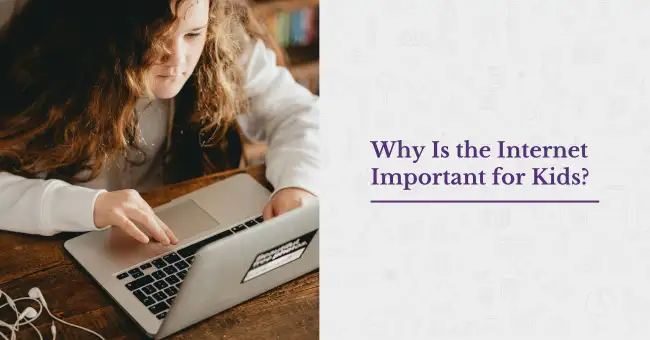
In this era of digital advancement, several aspects of our lives are intertwined with technology. As changes occur continuously, learning becomes a necessity for all, and the internet has evolved from a mere source of information into a transformative tool. From a very young age, children are exposed to digital devices and the internet—not only for entertainment, but also as a gateway to a vast spectrum of knowledge that supports their overall development.
Today’s curriculum focuses heavily on nurturing both intellectual and technological skills. It enables learners to develop innovative ideas, collaborate effectively, and adapt to the ever-evolving demands of a technology-driven world.
Learning Beyond the Classroom
Traditionally, learning was confined to textbooks and the four walls of a classroom. However, modern curricula like IB and Cambridge encourage learners to investigate, analyse, and connect their learning to the real world. These frameworks empower children to make meaningful connections, interact with diverse perspectives, and engage in inquiry-driven learning.
So, it’s no surprise that with the internet, young learners are not just consuming information—they’re creating change.
With the internet, children can:
- Research topics beyond the classroom and dive deeper into areas of interest
- Use guided videos to simplify complex concepts
- Access up-to-date information and diverse global perspectives
- Connect with people across the world, building relationships and communication skills
Whether it’s a science experiment, a historical project, or a school event, the internet offers an interactive experience that deepens understanding and fuels curiosity. It transforms education from a passive activity into an engaging, inquiry-led journey.
Connected Classrooms
As a Computer Science teacher, I have found immense satisfaction in witnessing this transformation firsthand—especially in how the internet is reshaping students’ learning journeys across subjects.
With the alpha generation operating in a highly connected ecosystem, digital tools and platforms have become the foundation of knowledge construction. As schools implement BYOD (Bring Your Own Device) policies, internet access has become a prerequisite across subjects.
Students now leverage the internet for:
- Dynamic exploration through simulations, coding sandboxes, and real-time data visualisations
- Inquiry-based research using credible digital libraries, tech blogs, and open-access journals
- Tracking current global trends to enhance contextual understanding and critical thinking
For instance, while teaching sorting algorithms, I don’t rely solely on theoretical explanations. Students interact with simulators, observe real-time changes in time complexity, and read insights from professional developers. The learning paradigm has shifted students must now understand how a concept is applied, why it matters, and how it fits into the world they’re preparing to enter.
Supporting 21st-Century Competencies
Modern education systems aim to develop globally competent individuals—those who can think critically, act responsibly, and engage with the world’s challenges. The internet plays a crucial role in supporting these 21st-century skills.
Students now engage in research and problem-solving with a multidisciplinary lens. They explore a wide range of applications and platforms that nurture creativity, innovation, and solution-building.
Digital resources such as virtual labs, online discussion groups, Microsoft Teams, and Google Workspace help students collaborate, share ideas, and adapt to virtual environments—skills that are essential in the modern workforce.
Promoting Global Awareness and Inclusivity
The internet exposes children to different cultures, languages, and global issues. Through documentaries, books, and virtual tours, children can explore how people live, communicate, and celebrate around the world. This fosters empathy, cultural sensitivity, and a deeper appreciation of diversity.
Learners also participate in global projects, connect with peers in other countries, and use interactive simulations to explore critical topics like climate change. The internet builds awareness about the UN’s Sustainable Development Goals (SDGs), encouraging learners to engage in advocacy and participate in meaningful action.
But What About Safety?
Like any powerful tool, the internet has its risks. Exposure to inappropriate content, misinformation, and online threats are valid concerns. That’s why digital safety must be a priority.
With proper guidance from parents and educators, children can learn to use the internet responsibly. Parents should:
- Enable safety settings and filters
- Set screen time limits
- Provide access only to age-appropriate websites and apps
Importantly, open conversations should be encouraged so that children feel safe discussing their online experiences. Digital literacy—including understanding cyberbullying, protecting one’s digital footprint, and practicing online etiquette—should be introduced early, promoting digital well-being.
Conclusion: A Gateway, Not a Hindrance
The internet is not a hindrance - it’s a gateway. When used thoughtfully and safely, it becomes an environment where children can explore, innovate, and grow.
Aligned with the goals of global education, the internet equips learners with the skills and mindset needed to thrive in a connected, digital future. Let’s continue to support, guide, and inspire our children - because when learning has no limits, neither do they.
Written by: Jinu M John
Cambridge Computer Science Examiner ICT/CS Facilitator - Secondary
JBCN International School Chembur
Share