
Published on: July 8, 2026
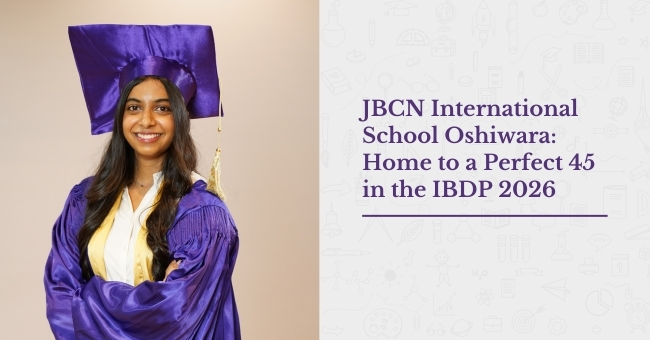
JBCN International School Oshiwara Continues to Set the Benchmark in IB Diploma Results
For parents researching the best IB schools in Mumbai, examination results offer valuable insight into a school's academic strength, teaching quality, and learner support. While no single number defines a learner's journey, consistently strong IB Diploma Programme (IBDP) results demonstrate the effectiveness of a school's academic ecosystem.
The Class of 2026 at JBCN International School Oshiwara has once again delivered exceptional outcomes, achieving a school average of 37.8 points, significantly above the global IB Diploma average of 30.88 points for the May 2026 examination session.
The highlight of this year's results was an extraordinary achievement by Zara Kanchwala, who secured a perfect score of 45 out of 45, placing her among the top 0.5% of IB Diploma learners worldwide.
These results reflect years of consistent academic mentoring, personalised guidance, and a learning environment that encourages intellectual curiosity alongside academic excellence.
JBCN Oshiwara IBDP Results 2026 at a Glance
The Class of 2026 achieved several outstanding milestones:
- School Average: 37.8 points
- Global IB Average: 30.88 points
- Highest Score: 45/45 (Perfect Score)
- Top 25% of learners averaged 41.1 points
- Top 50% of learners averaged 39.2 points
- Average Diploma Core Score (Theory of Knowledge + Extended Essay): 2.20 out of 3
- Strong percentage of subject papers scored 5 or above
- Learners successfully awarded the IB Diploma
A school average approaching 38 points places the cohort well above global benchmarks and reflects consistent academic achievement across the graduating class.
Zara Kanchwala Achieves a Perfect 45 Out of 45
The defining moment of this year's results was Zara Kanchwala's remarkable achievement of a perfect 45 points, the highest possible score in the International Baccalaureate Diploma Programme.
Scoring 45 requires exceptional performance across six subjects, Theory of Knowledge (TOK), the Extended Essay (EE), and the Diploma Core requirements. Only a very small percentage of IB learners around the world achieve this distinction each year.
Her accomplishment places her among the top 0.5% of IB Diploma candidates globally, an achievement that reflects academic excellence, discipline, and intellectual curiosity.
Celebrating the Class of 2026 Top Performers
The strength of the cohort extended far beyond one exceptional score.
45 Points
- Zara Kanchwala
43 Points
- Ariv Mehra
42 Points
- Ishaan Patel
- Khwaish Kamathia
- Ritika Kedia
40 Points
- Tanishka Bhandare
The breadth of high scores across the cohort reflects a culture of sustained academic excellence rather than isolated individual success.
Excellence Beyond Subject Scores
One of the distinguishing features of the IB Diploma Programme is its emphasis on independent research and critical thinking through the Diploma Core.
The Theory of Knowledge (TOK) course encourages learners to question assumptions and explore how knowledge is constructed across disciplines, while the Extended Essay develops university-level research and academic writing skills.
The Class of 2026 achieved an average Core score of 2.20 out of 3, with several learners earning the maximum 3 out of 3 Core points, demonstrating exceptional performance in these academically demanding components.
Learners who secured full Core points include:
- Ariv Mehra
- Zara Kanchwala
- Khwaish Kamathia
- Ayan Mukherjea
- Arwaan Makhija
- Shamika Mallya
- Tanishka Bhandare
- Vihaan Shetty
Consistent Academic Growth Over the Years
Outstanding IB results are rarely the outcome of a single examination cycle. They reflect sustained investment in teaching, mentoring, learner wellbeing, and academic planning.
JBCN Oshiwara has consistently maintained school averages well above the global benchmark over successive graduating cohorts, with the Class of 2026 achieving a school average of 37.8, continuing the school's tradition of academic excellence.
Consistency remains one of the strongest indicators of academic quality when evaluating an IB school.
Preparing Learners for Success Beyond School
Strong IB results are only one part of a learner's journey.
The International Baccalaureate Diploma Programme is recognised by universities worldwide because it develops skills that extend well beyond examinations, including:
- Critical thinking
- Independent research
- Academic writing
- Time management
- Communication
- Collaboration
- Global perspectives
- Ethical decision-making
These are the skills that prepare learners for success at leading universities and in future careers.
The JBCN Oshiwara Approach to IB Success
At JBCN International School Oshiwara, academic excellence is supported through a comprehensive framework that combines personalised guidance with learner wellbeing.
Throughout the two-year Diploma Programme, learners benefit from:
- Individual academic mentoring
- Regular formative assessments
- Structured Internal Assessment (IA) guidance
- Extended Essay supervision
- Theory of Knowledge mentoring
- Subject-specific intervention sessions
- University and career counselling
- Counselling and wellbeing support
Rather than focusing solely on examination performance, the school aims to develop confident, independent learners prepared for university and life beyond school.
Academic Excellence and Global Opportunities
The strong IBDP results complement another significant milestone for the Class of 2026.
Learners across the JBCN network have collectively received 488+ university offers across 19 countries and secured over USD 6 million in scholarships, reflecting the impact of sustained academic mentoring and comprehensive university guidance.
The combination of strong academic outcomes and successful university placements demonstrates how the IB Diploma Programme prepares learners not only for examinations but also for higher education at leading institutions around the world.
Why IB Results Matter When Choosing an IB School
For parents comparing IB schools in Mumbai, examination results should always be viewed alongside other indicators of educational quality.
These include:
- Consistency of school averages over multiple years
- Performance against the global IB average
- Quality of university counselling
- Teacher expertise and subject mentoring
- Learner wellbeing support
- Opportunities for research and experiential learning
- University placements and scholarships
Together, these factors provide a more meaningful picture of a school's ability to prepare learners for long-term success.
Congratulations to the Class of 2026
The achievements of the Class of 2026 reflect the dedication, resilience, and curiosity of every learner, supported by educators, counsellors, and families throughout their IB journey.
From a perfect score of 45 points to a school average of 37.8, the results are a celebration of consistent effort, academic ambition, and the values that define an IB education.
We congratulate every learner on this significant milestone and look forward to seeing the impact they will create as they begin the next chapter of their educational journey.
Frequently Asked Questions
-
What was JBCN Oshiwara's average IB Diploma score in 2026?
JBCN International School Oshiwara achieved a school average of 37.8 points, significantly higher than the global IB average of 30.88 points for the May 2026 examination session.
-
Who achieved the highest score in the IBDP Results 2026?
Zara Kanchwala secured a perfect score of 45 out of 45, placing her among the top 0.5% of IB Diploma learners worldwide.
-
Why is a score of 37.8 significant?
A school average of 37.8 is substantially above the global average and reflects consistently high academic performance across the graduating cohort rather than the achievements of only a few learners.
-
What are Diploma Core points in the IB?
Diploma Core points are awarded based on performance in Theory of Knowledge (TOK) and the Extended Essay (EE). Learners can earn up to three additional points, recognising their skills in critical thinking, research, and academic writing.
-
Why do universities value the IB Diploma Programme?
The IB Diploma Programme develops critical thinking, independent research, collaboration, communication, and analytical skills, preparing learners for the academic expectations of universities around the world.
Share