
Published on: October 30, 2026
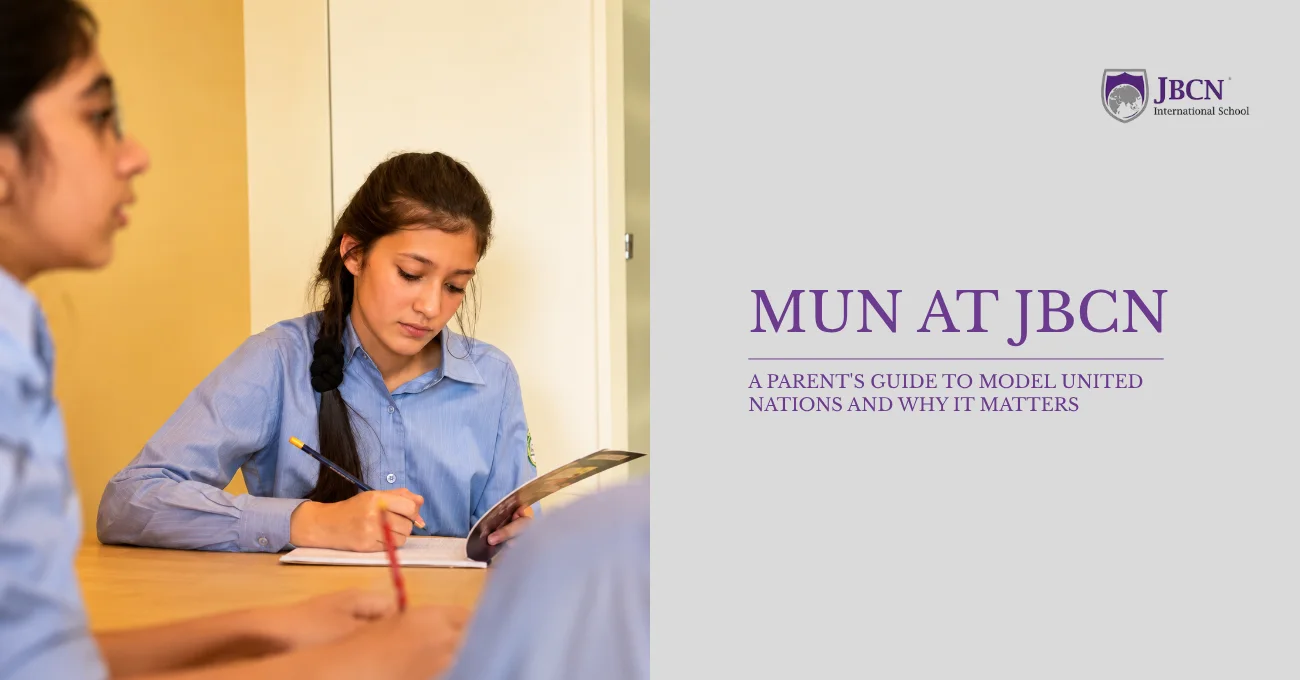
Parents often hear their child mention MUN and wonder what it actually involves. Is Model United Nations just a debate club, or does it genuinely help a child grow? Model United Nations is a structured activity where young people step into the role of diplomats, debate real global issues, and negotiate solutions. At JBCN, it sits within a wider leadership programme rather than standing alone as an occasional event.
What Is Model United Nations?
Model United Nations is an academic activity in which Learners represent countries in simulated United Nations committees. A participant, called a delegate, researches a nation's position, debates an assigned issue, and works with others to draft resolutions. The experience mirrors real diplomacy in a structured, supportive setting.
The appeal for parents is that MUN builds great skills while feeling like a genuine challenge to a child. A delegate has to research deeply, speak publicly, listen carefully, and negotiate, all in one session.
Why MUN Matters for Skill Development
MUN develops a cluster of skills that classrooms rarely stretch all at once. A single conference asks a child to research, argue, compromise, and stay composed under pressure. The skills below are the ones parents notice growing most.
Research and Preparation
A delegate must understand a country's stance, the history of an issue, and the positions of others. That preparation teaches a child to read widely, question sources, and form a reasoned view. Deep research becomes a habit rather than a chore.
Public Speaking and Negotiation
Standing up to speak in committee builds the kind of public-speaking confidence that carries into every part of school life. A delegate learns to make a case, respond to challenges, and find common ground with others. Those negotiation skills are useful far beyond the conference room.
Here is how the main parts of MUN map to the skills they build.
|
MUN Element |
Skill It Builds |
|
Researching a country's position |
Critical reading and analysis |
|
Speaking in committee |
Public speaking and confidence |
|
Negotiating resolutions |
Collaboration and compromise |
|
Responding to debate |
Quick thinking and composure |
How MUN Connects to JBCN's iPROPEL Framework
MUN is not a bolt-on activity at JBCN but part of the iPROPEL co-curricular framework, which includes leadership and outreach as core areas. Model United Nations sits at the Secondary stage of iPROPEL, where it draws directly on those leadership and global-citizenship themes. The activity fits naturally into how JBCN develops Changemakers through real-world leadership.
JBCN also runs its own learner-led conference, JBCN MUN 2026, held under the theme Diplomacy, Dialogue, Decisive Action. JBCN Learners have earned recognition at MUN conferences across Mumbai and India, at external events and at the school's own conference. Hosting a conference gives Learners the chance to organise and lead, not only participate.
What Participation Looks Like at JBCN
Participation at JBCN is guided, so a first-time delegate is never thrown in unprepared. Educators and senior Learners help newcomers understand the rules, research their country, and practise speaking before a conference. The journey is as valuable as the award.
- A Learner joins and is assigned a country and committee.
- Research and preparation follow, with mentor guidance.
- The delegate practises speaking and drafting positions.
- At the conference, the delegate debates, negotiates, and collaborates.
- Feedback afterwards helps the Learner grow for the next event.
How MUN Strengthens a University Application
Sustained involvement in MUN strengthens a university application by showing initiative, leadership, and global awareness. Admissions officers value a child who has committed to something demanding and grown through it. MUN gives a Learner real, specific experiences to write about.
The deeper value is character, not just the line on a form. A Learner who has chaired a committee or led a delegation has practised leadership in a way that stays with them.
Begin the Conversation
The best way to understand MUN at JBCN is to see how it fits a child's wider growth on campus. If you want to know how your child could take part, the admissions team at your nearest JBCN campus can explain how iPROPEL and MUN work together. A short conversation shows how a single activity can shape confidence and leadership.
Frequently Asked Questions
-
How Do Learners Join MUN at JBCN?
Learners join MUN through the iPROPEL co-curricular programme at the Secondary stage, with guidance from educators and senior participants. A newcomer is assigned a country and committee, then supported through research and speaking practice. The process is structured so first-timers feel prepared.
-
Is Prior Debate Experience Required for MUN?
No, prior debate experience is not required to begin MUN. New delegates are guided through the rules, research, and speaking skills before their first conference. Confidence grows with practice, and many strong delegates started with no debating background at all.
-
What Age Can a Child Start Model United Nations?
At JBCN, MUN sits within the Secondary stage of the iPROPEL programme, so it usually begins in the middle and senior years. Public-speaking foundations are built earlier through Speech and Drama. Your campus can advise on the right starting point for your child.
-
What Skills Does MUN Actually Build?
MUN builds research, public speaking, negotiation, teamwork, and composure under pressure, all in a single activity. A delegate also develops global awareness by studying real international issues. The skills support both academic growth and university applications.
-
Does JBCN Run Its Own MUN Conference?
Yes, JBCN runs its own learner-led conference, JBCN MUN 2026, under the theme Diplomacy, Dialogue, Decisive Action. JBCN Learners also take part in MUN conferences across Mumbai and India. Hosting a conference lets Learners organise and lead, as well as participate.
-
How Does MUN Help With University Applications?
MUN strengthens a university application by demonstrating initiative, leadership, research, and global awareness. Admissions officers value sustained commitment to a demanding activity alongside strong academics. A Learner gains specific, genuine experiences to write about in essays and interviews.
Share