
Published on: November 13, 2026
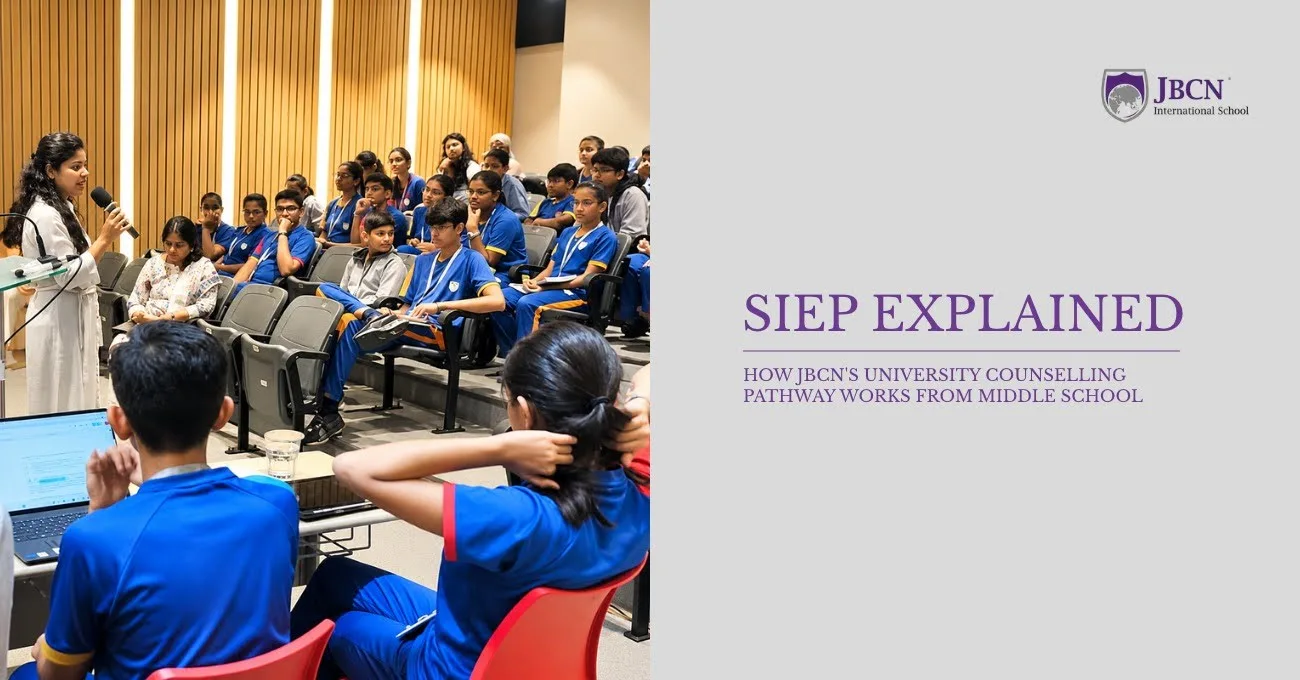
Most parents assume university planning begins in Grade 11, around the time application portals open. At JBCN, the groundwork starts years earlier, and the plan holding it together has a name. SIEP, short for Strategic Individual Excellence Plan, keeps a Learner's subject choices, aspirations and university shortlist pointing the same way.
What SIEP Means at JBCN
SIEP is a Strategic Individual Excellence Plan, built around a Learner's academic strengths, aspirations and learning style. Rather than treating university guidance as one conversation in the final year, the plan runs as a continuous thread through senior school. The purpose is alignment, so the subjects a Learner picks and the courses they later apply to are not working against each other.
The Three Things a SIEP Plan Keeps in Step
A plan is only useful if it connects decisions usually made in isolation. SIEP links three of them.
- Subject choices: the combination a Learner carries into senior secondary, chosen with target courses in mind rather than justified afterwards.
- Coursework topics: internal assessment and research topics picked to support the direction a Learner is heading.
- University shortlists: a working list of courses and countries, revisited as grades and entry requirements become clearer.
How This Differs From General Career Counselling
Career counselling answers a broad question about what a child might enjoy doing. A personalised university counselling plan answers a narrower, more practical one.
- Career counselling asks: which fields suit this child's interests and aptitudes?.
- SIEP asks: given those fields, which subjects, grades and application routes make them reachable.
- The difference in practice: one produces direction, the other a sequence of decisions with deadlines attached.
How the Pathway Runs From Grade 6 to Grade 12
JBCN's career and university guidance does not begin and end with applications. Career awareness work starts in middle school, the university-specific pathway formally opens in Grade 9, and SIEP is the named plan that carries a Learner through the senior years. Each stage has a different job.
|
Stage |
What Happens |
What a Parent Sees |
|
Grades 6 to 8 |
Career awareness through interactive sessions, interest assessments and skill workshops |
Career Days, visiting professionals, field trips to workplaces and universities |
|
Grade 9 |
Self-discovery, plus an introduction to undergraduate systems in India and abroad |
First structured conversations about where study might lead |
|
Grades 10 and 11 |
Building the academic and personal profile behind an application |
Subject selection guidance and early shortlisting |
|
Grade 12 |
Finalising and submitting applications |
Counselling that brings learners, parents and educators into the same conversation |
Middle School, Where Awareness Comes First
Grades 6 to 8 are deliberately exploratory. Interest assessments and skill workshops widen a child's sense of what work looks like, and Career Days and workplace visits make that concrete.
- Goal: broaden the field of options before anything narrows.
- Method: interactive sessions, interest assessments, and skill workshops.
- What it is not: a decision point, and no Learner commits to a direction at this age.
Grade 9 Onward, Where the University Pathway Opens
Grade 9 shifts the focus from awareness to orientation. Self-discovery work continues, and alongside it, learners get their first proper look at how undergraduate admissions work in India and overseas.
- Grade 9: self-discovery and an introduction to undergraduate systems in India and abroad.
- Grades 10 and 11: academic and personal profile building, which is where subject choices start to carry weight. Grades 9 and 10 are also the Cambridge IGCSE years at JBCN.
- Grade 11 onward: the SIEP plan keeps subject choices, coursework topics and university shortlists in sync.
What a Counselling Session Actually Covers
Sessions run in two formats through the year. Group workshops cover course options, career fields and the training each requires, and one-to-one meetings convert that into decisions for an individual Learner.
- Subject choices: matching a combination to the entry requirements of target courses.
- Portfolio building: assembling evidence of interest and capability outside the transcript.
- Assessment strategy: planning how predicted grades and coursework present on an application.
- Interview readiness: preparation for courses and countries where interviews form part of selection.
- Global career exploration: widening the view beyond the professions most families already know.
How SIEP Connects Subject Choices to University Shortlisting
Subject selection is the decision that most constrains a university application later, which is why it sits at the centre of the plan. A Learner heading towards engineering, medicine or law needs a specific combination, and some combinations cannot be assembled retrospectively.
Working Backwards From the Course
The sequence that causes the fewest problems runs in reverse, starting at the destination.
- Identify the course family: engineering, medicine, law, business, design, or the liberal arts.
- Read the actual entry requirements: subjects and grades published by target universities, not assumptions about them.
- Check entrance exam eligibility: including Indian routes, where subject combination decides eligibility.
- Pick the combination: subjects that keep the widest set of those destinations open.
- Revisit each year: adjusting the shortlist as grades and interests settle.
Where the Senior Pathways Diverge
The plan looks different depending on which senior programme a Learner enters. Both routes end in university applications, and neither is the stronger choice.
- IB Diploma Programme: six subjects across groups, scored out of 45, with core components feeding research into an application.
- Cambridge AS and A Levels: three to four subjects studied in depth, reported per subject on an A* to E scale.
- Shared ground: both run on predicted grades, so Grade 11 and 12 counselling is largely about making predictions and the shortlist agree.
- Before Grade 12: a closer look at how UK and US applications differ.
- Before subject sign-off: how subject level shapes a Diploma profile.
The Outcomes This Pathway Is Built to Support
Counselling is judged on where Learners end up, and JBCN publishes that record rather than describing it in general terms. The figures below are for the Class of 2026 across the school group.
- University offers: 488 offers for the Class of 2026.
- Scholarships: USD 6 million for that cohort, across more than 20 countries.
- Overseas destinations named by JBCN: Stanford, MIT, Cornell, Johns Hopkins, UCLA, the London School of Economics and King's College London.
- Indian destinations named by JBCN: Ashoka University, FLAME University, ATLAS SkillTech University and Krea University.
- Recognition: IBDP Programme of the Year at the Global Education Awards 2026.
- Full record: JBCN's university placements record.
- Recognition by qualification: which universities accept the IB Diploma.
- Across the campuses: guidance runs at each of JBCN's five Mumbai campuses, with the senior pathway differing by campus.
- The sector view: JBCN's account of university counselling in Mumbai.
Begin the Conversation
University planning rewards families who ask questions early, and there is no wrong year to ask them. To see how the pathway would apply to your own child, a campus visit is usually the easiest first step.
Speak with our admissions team.
Frequently Asked Questions
-
What is SIEP at JBCN?
SIEP stands for Strategic Individual Excellence Plan. The plan is personalised to each Learner's academic strengths, aspirations and learning style, and it keeps subject choices, coursework topics and university shortlists aligned as a Learner moves through senior school.
-
When does university preparation start at JBCN?
Career awareness work begins in middle school, in Grades 6 to 8, through interest assessments, skill workshops and Career Days. The university-specific pathway opens in Grade 9 with self-discovery and an introduction to undergraduate systems in India and abroad, and the SIEP plan runs through Grade 11 and 12.
-
How is SIEP different from general career counselling?
Career counselling identifies fields that suit a child's interests and aptitude. SIEP takes those fields and works out the subject combination, grade profile and application route needed to reach them, which makes it a planning tool rather than an exploratory one.
-
Does SIEP cost extra?
University and career counselling is delivered by JBCN's in-house counselling team as part of the school programme. For current details on what is included at a specific campus, ask the admissions team directly, since provision is confirmed campus by campus.
-
Can a SIEP plan change if my child changes direction?
Yes, and most plans do change. A plan is revisited as grades, interests, and entry requirements become clearer, so a Learner who moves from engineering towards economics in Grade 11 has the shortlist and subject advice reworked rather than being held to an earlier decision. Career and university guidance runs across all five Mumbai campuses, and the curriculum at a given campus shapes what the revised plan can offer.
-
Who delivers university counselling at JBCN?
JBCN has an in-house university counselling team rather than an outsourced service. At the Parel campus, the named counsellors are Suman Yadav, Senior Career and College Counsellor, and Sutapa Dayal, Career Counsellor.
-
What if my child has no idea what they want to study?
That is the normal starting position, and the early stages are built for it. Grades 6 to 8 widen options rather than narrow them, and no shortlist is expected until the profile-building years of Grades 10 and 11.
Share