
Welcome to the Primary section of JBCN International School, Parel! Located in the heart of Mumbai, our programme is designed to nurture curious, confident, and collaborative learners who are equipped to excel in today's dynamic world. Through hands-on activities, project-based learning, and the integration of digital tools, we create a vibrant and engaging learning experience. With experienced teachers who focus on the unique strengths and challenges of every child, we foster an environment where every learner thrives. Begin your child's journey of growth and success with us!
Enquire Now The International Baccalaureate® aims to develop inquiring, knowledgeable and caring young people who help to create a better and more peaceful world through intercultural understanding and respect.
To this end the organization works with schools, governments and international organizations to develop challenging programmes of international education and rigorous assessment.
These programmes encourage students across the world to become active, compassionate and lifelong learners who understand that other people, with their differences, can also be right.
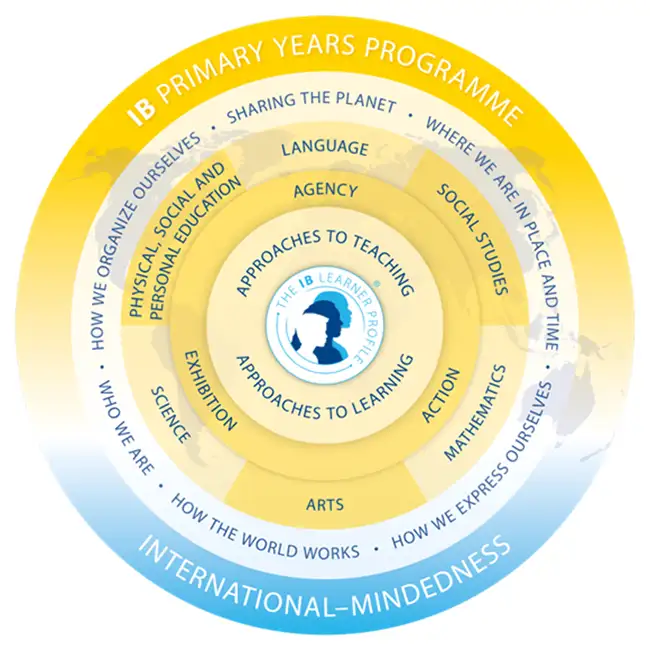
The PYP is a curriculum framework for young learners aged 3–12. Like all International Baccalaureate (IB) programmes, the IB learner profiles permeates all facets of school life in the PYP. The PYP is based on the recognition of a child’s natural curiosity, creativity and ability to reflect. It generates a stimulating, challenging learning environment to nurture the whole child and foster a lifelong love of learning for all. The PYP is transdisciplinary, meaning students learn across subject areas while inquiring into big ideas. Regardless of location, size, or make-up, an IB PYP school strives to develop an internationally minded person. It means our students are taught WHY they should know something and HOW it connects to other subjects and the real world.
The PYP is a framework for schools and their approach to learning and teaching. Students explore significant concepts through units of inquiry.
The six transdisciplinary themes (Programme of Inquiry) that guide units of inquiry in each school year are:
Units of inquiry authentically interweave ideas and skills from the relevant subject areas:
The aim of all IB programmes is to develop internationally minded people who, recognizing their common humanity and shared guardianship of the planet, help to create a better and more peaceful world. Learner profiles are a broad range of human capacities and responsibilities that go beyond academic success. Shaping learners who grow into thoughtful global citizens.
The IB approaches to learning skills (ATL) are grounded in the belief that learning how to learn is fundamental to a student's life in and out of a school context. In broad terms, IB programmes support learners in developing:
The approaches to learning and associated sub-skills support students of all ages in being agentic and self-regulated learners. Through a variety of strategies, PYP teachers collaboratively plan for implicit and explicit opportunities to develop ATL both inside and outside the programme of inquiry.
In the International Baccalaureate Primary Years Programme (IB PYP), the Approaches to Teaching (ATT) are essential in shaping how learning happens. These approaches are not just instructional methods—they reflect the philosophy of the IB and directly support its goal of developing internationally minded, lifelong learners.
The approaches to learning and associated sub-skills support students of all ages in being agentic and self-regulated learners. Through a variety of strategies, PYP teachers collaboratively plan for implicit and explicit opportunities to develop ATL both inside and outside the programme of inquiry.

Inquiry based Pedagogy

Transdisciplinary Nature of Learning

Concept based learning

Learner Profiles

Taking Action

Assessments for Understanding
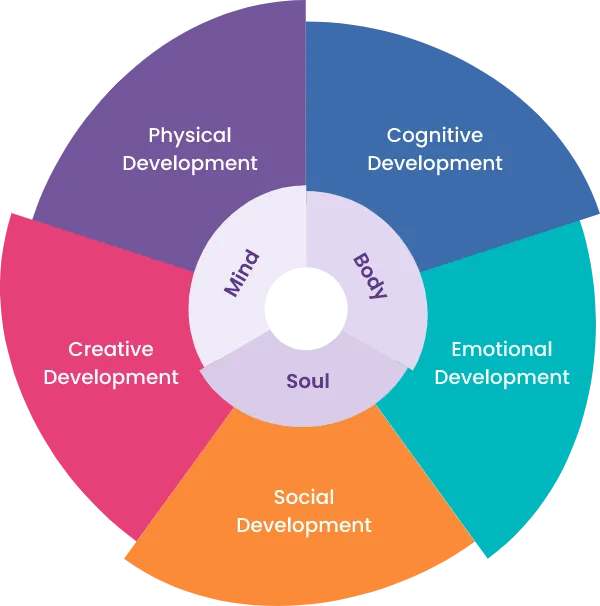
Our focus is on providing a comprehensive education that prepares learners for the future by introducing them to a wide range of subjects and studies. we aim to make learners independent, self-aware, and confident, laying the foundation for academic success. The primary school curriculum is based on eight areas of learning and integrates the IB Primary Years Programme (PYP) that builds conceptual understanding and develops the whole child as an inquirer. The PYP offers an inquiry-based, transdisciplinary curriculum framework that empowers learners to take ownership of their learning and become active participants in a lifelong journey of learning.
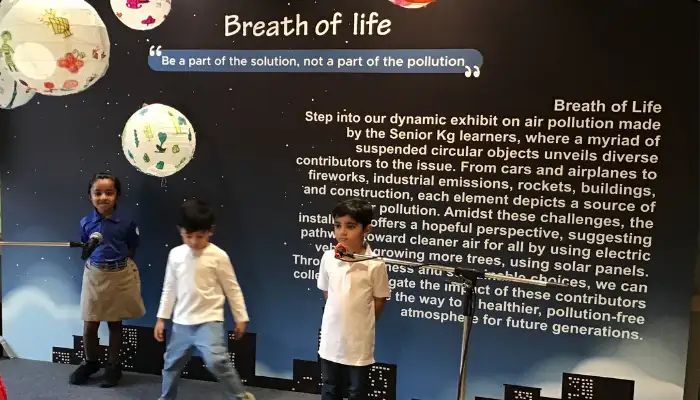
In the final year of the IB Primary Years Programme (PYP), learners participate in the PYP Exhibition—a capstone project that showcases their growth as inquirers and problem-solvers. During this process, students investigate a real-world issue or opportunity that holds personal significance. They research, document, and present their findings, demonstrating critical thinking, collaboration, and communication skills.
The exhibition is more than a presentation; it's a celebration of each learner's PYP journey, bringing together parents, peers, and educators to share and reflect on their achievements.