
Published on: August 4, 2026
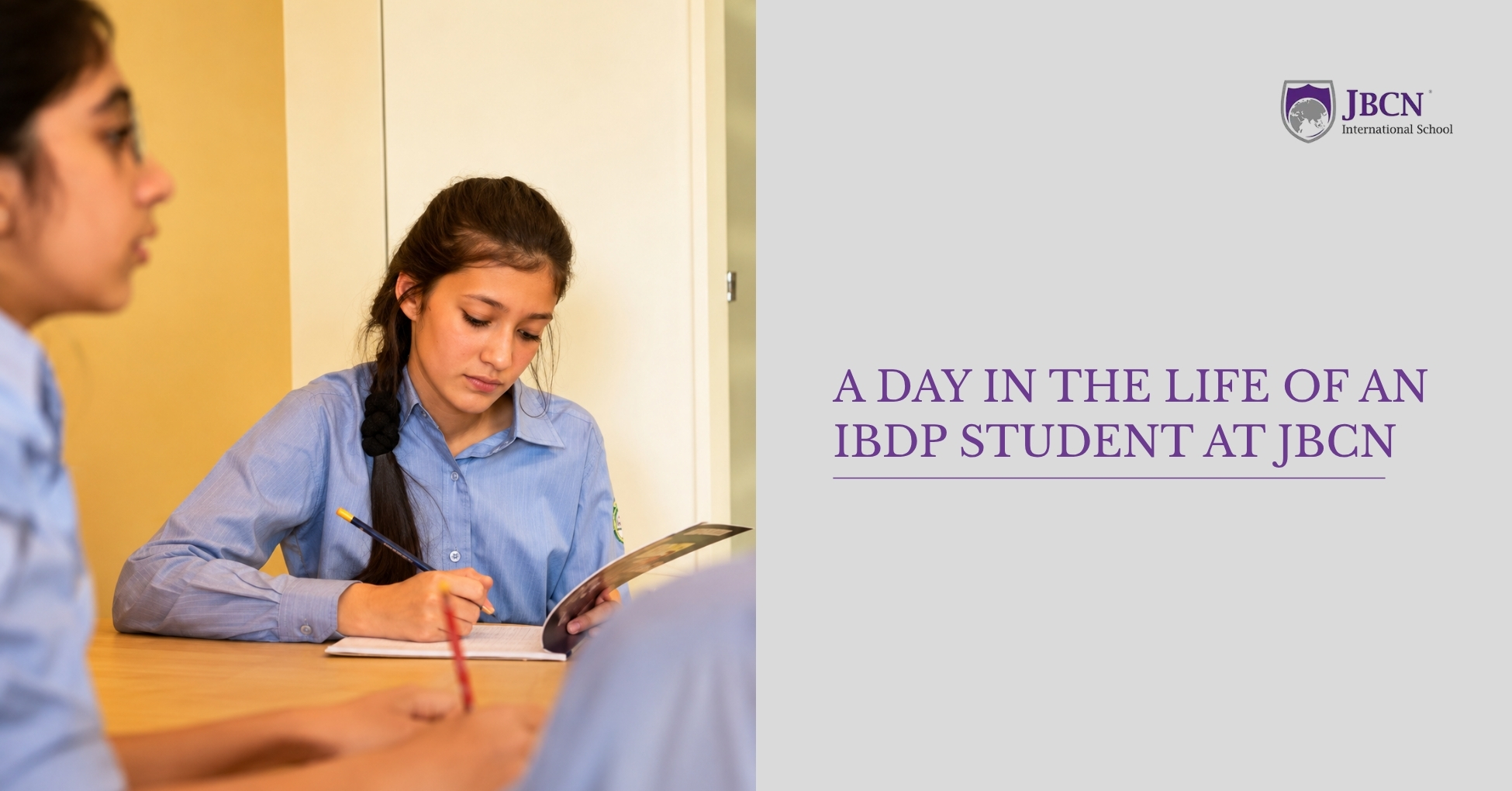
When families visit JBCN School to learn about the IB Diploma, one of the most common questions from students is simple: what does a normal day actually look like? Not the brochure version. The real one.
This blog answers that question honestly, walking through a typical day in the life of an IBDP student at JBCN, from the morning routine through to the evening, and what makes the experience here different from the version of IB that many families imagine before they start.
Morning: Before School Begins
For most JBCN IBDP students, the day starts with some form of preparation before school. This might be reviewing notes from the previous day’s classes, completing a short reading for Theory of Knowledge, or finishing a section of an Internal Assessment that has a staged deadline coming up. IB students at JBCN generally find that the students who do a small amount of focused work each morning stay significantly more on top of the programme than those who try to catch up in longer sessions on weekends.
CAS activities that happen in the morning, sports practice, community service commitments, or creative projects, are logged and reflected on as part of the portfolio. For students who have scheduled their CAS activities well, these morning sessions are not additional stress. They are part of a planned rhythm.
The School Day: Structure and Depth
The school timetable at JBCN is built around the IB’s requirement for 150 teaching hours per Higher Level subject and 240 hours for the full programme. Classes are not simply periods of content delivery. The IB’s approach to teaching emphasises inquiry, discussion, and application alongside the building of subject knowledge.
A typical IBDP school day at JBCN includes:
- Four to five subject classes of approximately 70 minutes each, mixing Higher Level and Standard Level subjects across the week.
- A Theory of Knowledge class or discussion session, which takes place regularly throughout the two years rather than being concentrated in the final semester.
- Advisory or pastoral time, where students meet with their form teacher or counsellor for check-ins on academic progress, wellbeing, and upcoming deadlines.
- Structured study periods, which IBDP students at JBCN use for IA work, Extended Essay research, or subject review under supervision.
What Lessons Actually Look Like
IB classes at JBCN are not lectures. The IB curriculum is designed around inquiry and application, and JBCN teachers are trained to facilitate this rather than simply deliver content.
A History HL class might involve students analysing primary sources and debating their significance. A Chemistry HL class might combine content teaching with experimental design for an upcoming IA section. An Economics HL class might involve students applying theoretical frameworks to a real-world news event. A Language A class might involve close reading followed by discussion of authorial choices.
The common thread is that students are asked to do something with knowledge rather than simply receive it. This approach is more demanding in some ways than passive note-taking. It is also more engaging, and it produces the depth of understanding that IB examinations and university degrees both require.
Break and Lunch: More Than Rest
Break and lunch at JBCN are genuinely unstructured time, which matters more than it might seem. IB students who have a full schedule need real downtime built into the day. Students use this time to talk with friends, grab food, decompress between demanding classes, and occasionally have quick catch-up conversations with teachers or counsellors about upcoming work.
For students with CAS commitments that take place during school hours, lunch slots sometimes involve running a peer tutoring session, coordinating a school initiative, or meeting with a community partner. These are not obligations imposed by the school. They are activities the students themselves have chosen and planned as part of their CAS programme.
After School: The IB Reality
After school is where the IB’s reputation for demanding workload becomes most visible. JBCN students typically spend two to three hours on academic work most weekday evenings. What that looks like varies significantly by where a student is in the two-year programme and what is coming up.
In Grade 11, the evening work is a mix of subject preparation, early IA research, Extended Essay reading, and TOK engagement. The Extended Essay at JBCN has scheduled supervisor meetings and RPPF checkpoint deadlines built into the calendar, so students in Grade 11 are making regular, structured progress on their EE rather than leaving it entirely to Grade 12.
In Grade 12, the evening work intensifies as IA final submissions, the TOK essay, university application preparation, and examination revision all begin to converge. Students who managed their time well in Grade 11 find this period demanding but manageable. Students who did not find it genuinely difficult.
The Counselling Touchpoints
One of the things that distinguishes the IBDP experience at JBCN from what students describe at other schools is the regularity and quality of counselling contact. University counselling is not a Grade 12 activity at JBCN. It runs across both years.
In Grade 11, students have regular individual sessions with the counselling team covering university pathway planning, subject performance, EE progress, and extracurricular development. By the time Grade 12 begins, students have a clear university longlist, an understanding of what each target programme requires, and a personal statement process that is already underway rather than starting from scratch.
In Grade 12, counselling sessions become more frequent and more focused: personal statement drafting and revision, application strategy, interview preparation for UK medicine and Oxbridge applicants, financial aid and scholarship guidance, and results day planning.
Evenings and Weekends
JBCN students and their families frequently ask how much time the IB actually takes outside school hours. The honest answer is approximately twelve to fifteen focused hours per week across evenings and weekends for most students in Grade 11, rising to fifteen to twenty hours in the busier periods of Grade 12.
Students who manage this well are not the ones who study the most total hours. They are the ones who plan specifically, use their study blocks with genuine focus, and protect genuinely unstructured time for rest, sport, family, and the non-academic dimensions of life that prevent burnout and sustain performance across two demanding years.
At JBCN, the academic calendar is structured to minimise avoidable deadline clustering. IA milestones across subjects are staggered. The EE programme runs from Grade 11. CAS is planned across both years. These are not small things. They are what makes the workload manageable rather than overwhelming.
What Makes the JBCN IBDP Experience Distinctive
Students who have attended information sessions at multiple IB schools before choosing JBCN consistently note a few things that distinguish the experience here.
- The counselling relationship starts early and goes deep. By Grade 12, counsellors at JBCN know their students well enough to write specific, compelling recommendations and to offer guidance that is genuinely personalised rather than generic.
- The academic culture values genuine understanding over grade optimisation. Subject teachers at JBCN are trained in IB methodology and approach their classes as intellectual communities rather than content delivery sessions.
- The IBDP community is small enough that every student is known. In a smaller cohort, there is no hiding at the back of the room. Students are engaged, challenged, and supported as individuals.
- The extended alumni network provides concrete evidence of where the JBCN IBDP pathway leads. Current students can speak with recent graduates at universities including Cornell, Edinburgh, Bocconi, and leading Indian private universities about their experiences.
The Bottom Line
A day in the life of an IBDP student at JBCN is genuinely demanding. The IB Diploma is demanding. What JBCN adds to that experience is structure, support, genuine relationships, and a counselling programme that ensures students are not navigating the most important decisions of their early lives alone.
The students who thrive in this environment are not necessarily the ones with the highest Grade 10 results. They are the ones who are genuinely curious, genuinely engaged, and willing to do the work over two full years, not in a final sprint.
Interested in the IB Diploma at JBCN? Attend one of our open days to experience the school community firsthand and speak with current IBDP students about their experience.
Frequently Asked Questions
-
What is a typical school day like for IB students at JBCN?
A typical IBDP day at JBCN includes four to five 70-minute subject classes, regular Theory of Knowledge sessions, advisory and pastoral time, and structured study periods. Classes emphasise inquiry and application rather than content delivery alone.
-
How many hours of study do IB students at JBCN do outside school?
Most JBCN IBDP students spend approximately 12 to 15 focused hours per week on academic work outside school in Grade 11, rising to 15 to 20 hours during the busier periods of Grade 12.
-
When does university counselling start for IB students at JBCN?
University counselling at JBCN runs across both years of the IB Diploma, beginning in Grade 11 with individual sessions on university pathway planning, subject performance, and extracurricular development. It is not a Grade 12 activity.
-
How does JBCN support IB students with workload management?
JBCN structures the academic calendar to stagger IA milestones across subjects, runs the Extended Essay programme from Grade 11, and plans CAS across both years. Regular counselling check-ins track student progress and identify students who need support before they reach crisis point.
Related Reading
- What Two Years of the IB Diploma Really Feels Like
- JBCN Parel IB Results 2026
- JBCN Oshiwara IBDP Results 2026
- How University Counselling Works at International Schools in Mumbai
Share